



Trump calls on allies to send naval vessels to secure Strait of Hormuz
Donald Trump has urged allies, including the UK and France, to send naval ships to secure the Strait of Hormuz amid rising energy prices and ongoing conflict.
Italy’s Foreign Minister Antonio Tajani supports expanding the Aspides mission to reinforce maritime traffic security in Hormuz amidst rising tensions.
France is set to lead an EU mission aimed at reopening the Strait of Hormuz, addressing concerns over energy supply and navigation safety amid rising tensions.
Briefing summary
US President Donald Trump has urged allies, including the United Kingdom and France, to send naval vessels to secure the Strait of Hormuz, a vital corridor for oil traffic. He warned of a “bad future” for NATO if his request is ignored.
European leaders express caution regarding Trump’s call, with many nations hesitant to expand the Aspides mission due to regional security concerns. Italian officials advocate for reinforcing the mission to ensure maritime traffic, highlighting its importance for global energy stability.
Why is the Strait of Hormuz critical to Europe?
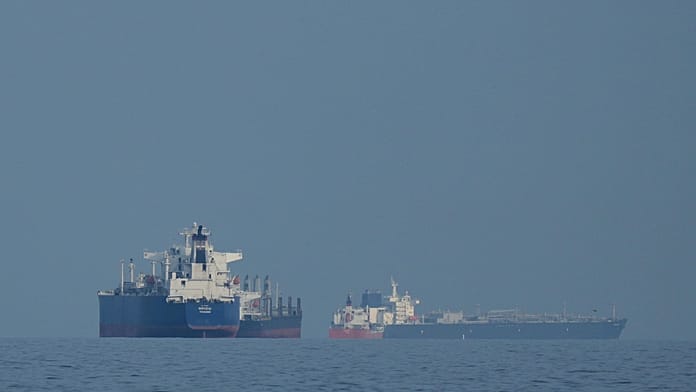
US President Donald Trump has called on allies to send ships to secure the Strait of Hormuz, effectively closed since the war in Iran started last month, and responsible for one-fifth of global oil traffic. If allies do not respond to the US or react negatively, Trump has threatened a “bad future” for NATO.
While the Americans call reopening the waterway “a small endeavour”, Europeans say the reality on the ground is far more complex and riskier as Tehran fires off missiles and drones indiscriminately.
But why is securing passage so crucial? EU News explains:
Why is the Strait of Hormuz so important?
For a simple reason: it is one of the most strategic and vital corridors for the transport of energy.
Lying between the Persian Gulf and the Gulf of Oman, the Strait of Hormuz accounts for 20% of global production oil. Without it, the global energy market could choke.
In fact, oil prices have soared since above $100 a barrel and analysts warn it could trade in the range of $150 to $200 if the conflict broadens in intensity and length.
For Europe, which has struggled to secure a stable energy supply since it cut off ties with Russia following its invasion of Ukraine, the conflict in the Middle East could translate into yet another energy crisis impacting households and the industry.
The Strait is also a key passage for fertilisers into Europe. In addition to handling oil and gas supply, around 13% of global fertiliser exports, according to the United Nations, also pass through the Gulf’s only access to the open ocean — an important contributor to the world’s food production.
“If there’s a lack of fertilisers this year, it’s going to be food deprivation next year,” the EU’s top diplomat, Kaja Kallas, told reporters ahead of the foreign affairs council today.
What is Donald Trump asking for?
Trump urged the United Kingdom, France, China, and Japan to send naval vessels to the region to protect oil shipments as energy prices have surged following US‑Israeli strikes on Iran and the waterway’s effective closure in the ensuing crisis.
The US President demanded that these countries protect their own territory, claiming it is the region from which they get their energy. French President Emmanuel Macron said last week that France is to lead the EU mission to reopen the Strait.
The International Energy Agency’s latest announcement to release 400,000 oil barrels from reserves last week hasn’t calmed energy markets, further urging EU leaders to find ways to ensure free and safe passage for ships attempting to cross the Strait of Hormuz.
Trump’s call for help comes only days after he dubbed Europe “weak” given its reliance on NATO for military protection in the face of a defiant Russia gaining ground against the Ukrainians.
So far, Japan, Australia, South Korea, and the United Kingdom have all rejected Trump’s calls to escort ships through the Strait.
How will the EU respond?
The main topic at Monday’s gathering of foreign affairs ministers will be how to help secure access to the Strait of Hormuz and prevent major disruptions to global oil supplies.
Its mandate is to “protect vessels,” safeguard freedom of navigation and “monitor the maritime situation in the Strait of Hormuz and surrounding waters, including the Red Sea, Gulf of Aden, Arabian Sea, Gulf of Oman and the Persian Gulf,” according to the Council.
However, many countries have expressed reservations towards changing the Aspides mandate.
A European diplomat told EU News the goal of the meeting is to establish capabilities and coordinate under the EU umbrella but did not foresee a large European coalition would emerge to escort ships out of the Strait of Hormuz in line with Trump’s request.
Both Germany and Romania have expressed doubts about such a mission. Its Foreign Affairs Minister, Oana-Silvia Toiu, suggested that Bucharest doesn’t want to get involved in the Aspides mission, as the country needs to keep its focus on its naval capabilities in the Black Sea.
Italian Deputy Prime Minister and Minister of Foreign Affairs Antonio Tajani said the “line of diplomacy” must prevail above all, noting that freedom of navigation through Hormuz interests not only Western countries but also the whole world, including China.
Yet the Italian politician overall supports expanding Aspides to patrol Hormuz. “We are at the helm of the Aspides mission, which I think must be reinforced to guarantee maritime traffic in the Red Sea and Suez. We will continue to work in that direction,” Tajani said.
What is Aspides naval mission?
The operation involves naval assets from several member states, including France, Germany, Greece, Italy and Spain. Its role is defensive, focusing on escorting merchant vessels and intercepting drones or missiles that threaten international shipping routes.
Its mandate is to “protect vessels,” safeguard freedom of navigation and “monitor the maritime situation in the Strait of Hormuz and surrounding waters, including the Red Sea, Gulf of Aden, Arabian Sea, Gulf of Oman and the Persian Gulf,” according to the Council
Is Russian energy part of the solution to the bloc’s crisis?
De Wever said that choosing that path is only “common sense” because the EU27 is facing a cascading energy crisis that risks driving the bloc into an economic recession.
Tajani also supported the possibility of the EU importing Russian energy in the future. However, he emphasized that as long as Russia continues its military aggression against Ukraine, the bloc should maintain a critical stance and keep sanctions in place against Moscow.
But once the war is over, the Italian said, a new season will begin.
“Once peace is reached, we are not at war with Russia, we can start doing what we used to do a long time ago, but now there is a situation that prevents us from having a remiss attitude towards the Russian Federation,” Tajani told reporters on Monday.
However, other ministers were far less enthusiastic about De Wever’s proposal.
Swedish Deputy Prime Minister and Energy Minister Ebba Busch argued that reversing that decision on Russian oil would make the EU’s word and values meaningless.
“We are determined to stay on course. It would be a mistake for us to repeat what we did in the past. The signal is very clear: in the future, we will not import any more molecules from Russia,” Jørgensen added.