



TL:DR – Industry Leaders Demand Urgent Action from EU to Lower Electricity Prices
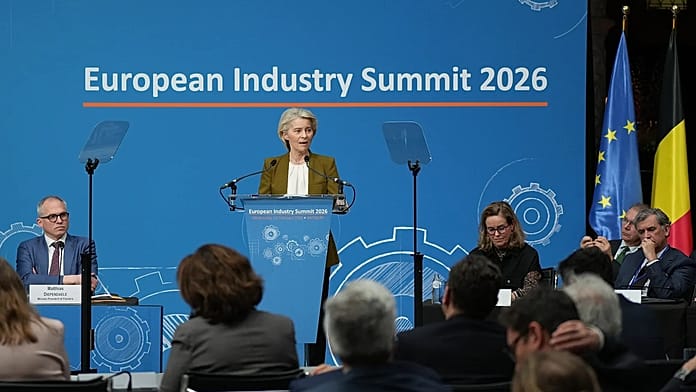
• On Wednesday, industry leaders urged the EU to lower electricity prices, which remain higher than global competitors, following a summit in Antwerp.
• More than 100 organisations signed a declaration highlighting the impact of high energy costs on sectors like chemicals and steel.
• Henrik Adam of EUROFER stated that electricity costs must be reduced to €50/MWh to attract investment in low-carbon steel.
• European Commission President Ursula von der Leyen acknowledged the high prices and called for improved grid efficiency and offshore wind projects.
• The EU plans to channel more emissions trading system revenues into energy-intensive industries to support decarbonisation efforts.
Industry bosses call on EU leaders for ‘urgent and bold’ action to cut energy prices
High energy prices in Europe are impacting energy-intensive industries, prompting industry leaders to call for urgent measures from the European Union (EU) to reduce power costs.
Following a summit in Antwerp on Wednesday, over 100 organisations signed a declaration highlighting that EU electricity prices remain higher than those in competing countries, primarily due to unique carbon costs that escalate year on year.
EU Commission Launches Trusted Investors Network for Deep Tech
Ursula von der Leyen discusses “Made in Europe” preference ahead of summit
The significance of these developments lies in the potential loss of investment and industrial capacity if high electricity prices continue. Industry representatives warn that sustained high and volatile electricity costs are major barriers to investment, electrification, and decarbonisation, particularly within the steel sector.
Industry Leaders Demand Action on Electricity Prices
Henrik Adam, President of the European Steel Association (EUROFER) and Executive Chairman of Tata Steel Netherlands Holding, stated, “If the EU wants investment in low-carbon steel to happen in Europe, it must deliver total electricity costs closer to €50/MWh – across all member states.” He emphasised that reducing power prices is essential for Europe’s economic and climate credibility.
Meanwhile, the European Chemical Industry Council (Cefic), led by the chemical lobby, is advocating for a return to pre-2021 electricity price levels of €44/MWh to regain industrial sovereignty and protect value chains. Markus Kamieth, President of Cefic and CEO of BASF, remarked, “Europe is losing industrial capacity at a speed we have never seen before.”
European Commission Acknowledges Industry Concerns
European Commission President Ursula von der Leyen addressed the situation during the summit, noting the role of gas in driving up prices while stating, “The good news is we are well-positioned to lower costs.” She added that improvements to the electric grid and offshore wind projects linked to national grids are pivotal to achieving lower energy prices.
Moreover, von der Leyen highlighted the need to channel additional financial resources from the EU’s Emissions Trading System (ETS) back into energy-intensive industries, stating, “Channelling more ETS revenues back to industry will therefore be a core focus of the upcoming reform of the Emissions Trading System.”
EU Plans to Review Carbon Market
Peter Liese, a veteran Member of the European Parliament and coordinator on the environment committee, acknowledged the challenges heavy industries face due to high energy prices and carbon costs. He asserted that the ETS is part of the solution rather than the cause of these difficulties.
The European Commission is set to revise the carbon market by July, as part of its climate law aimed at a 90% reduction in CO2 emissions by 2040. Federico Terreni, climate policy manager at Transport & Environment (T&E), stated that the upcoming review should “strengthen the system” to maintain a competitive industrial base through cheaper, clean transport and energy solutions.
“