
Latest News
- Carcassonne police officers suspended after leaked racist remarks video
- Lindsay Clancy attorney requests case dismissal following mistrial ruling
- MLA requests review following multiple collisions involving Surrey police
- National Guardsman charged after allegedly pointing gun at colleague in D.C.
- Woman banned from owning animals for 10 years after dog found neglected
- Russian man sentenced to 14 years for photographing military graves
- Analysis & Reaction: UK imposes sanctions and describes Israeli actions as ‘war crimes’ and ‘ethnic cleansing’
- Norway holds minute of silence for King Harald V at his funeral


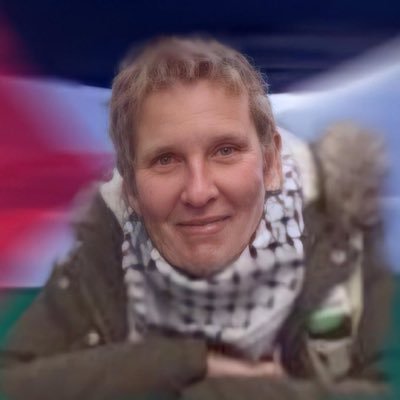
12 year-old Awni Al-Dos wanted to become a famous YouTuber with 100k subscribers, so the israelis murdered him in Gaza, along with his ambitions
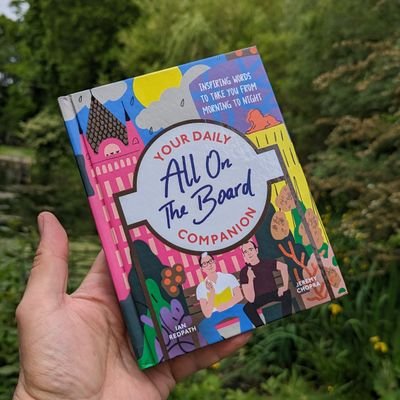
Rest in Peace Geoff Capes.
You will be forever loved and never forgotten.
Thank you for lifting us all with your strength, determination and spirit.
Sending love to your family, friends and fans all over the world.
#GeoffCapes

The outcomes of the Commonwealth summit, a biennial gathering of leaders from the fraying ends of the British empire, are notoriously hard to pin down.
But ahead of the talks, some members are demanding more than just goodwill from their hosts.

Carcassonne police officers suspended after leaked racist remarks video
Video Footage Released
Carcassonne’s municipal police officers were recorded making racist and misogynistic remarks during a patrol on 6 November 2025, with the footage inadvertently captured by a body camera.
Carcassonne’s municipal police officers were recorded making racist and misogynistic remarks during a patrol on 6 November 2025, with the footage inadvertently captured by a body camera.
Operational Significance
Evidence of systemic racism within municipal police operations calls into question the integrity and reliability of law enforcement in Carcassonne, necessitating urgent reforms and potential restructuring.
Evidence of systemic racism within municipal police operations calls into question the integrity and reliability of law enforcement in Carcassonne, necessitating urgent reforms and potential restructuring.
Official Statement
Carcassonne city council condemned the remarks as “unacceptable”, attributing the issues to previous municipal management, and confirmed that all officers involved have been suspended.
Carcassonne city council condemned the remarks as “unacceptable”, attributing the issues to previous municipal management, and confirmed that all officers involved have been suspended.
‘Sickening’ racist remarks and calls for a coup: French police under investigation
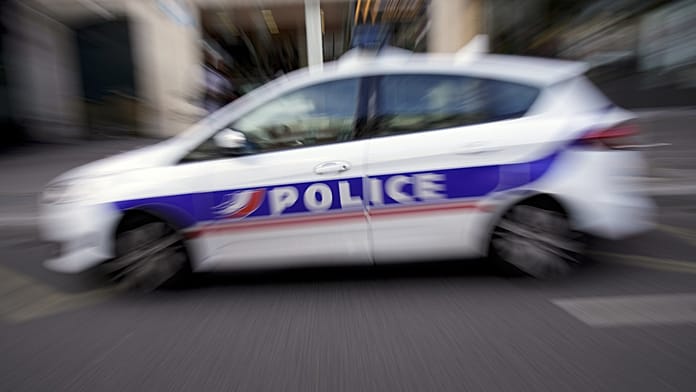
Six hours of footage and a torrent of racist, misogynistic and conspiratorial remarks. The local newspaper Midi Libre has published video from a night-time patrol by Carcassonne’s municipal police, recorded on 6 November 2025.
Captured inadvertently by one officer’s body camera, which they thought was switched off, it contains, according to the daily, comments described as “of exceptional violence”.
According to Midi Libre, a preliminary investigation has been under way since January 2026, when the footage is said to have been passed to the Carcassonne public prosecutor’s office.
Following the video’s publication by the newspaper, the prosecutor’s office confirmed to AFP that it had already opened an investigation, without specifying when.
‘These wogs drive fast’
The evening is quiet: the municipal police officers are called out to just one incident. But inside their vehicle, the remarks keep coming. From inside the police car, one of the officers insults a passer-by, calling him a “wog who stinks of kebab”. On two occasions, Black people are also compared to “monkeys”.
Between remarks targeting foreigners and non-white French people, the patrol also discusses women: “Back in the days of the caves, those stupid bitches, if they weren’t with their bloke, they’d get bumped off outside,” and about politics: “We’ve been eaten alive, we let everyone in, we’ve had 40 years of crap from the left, lefty scum.”
Beyond the racist remarks, the officers’ exchanges also feature rhetoric commonly associated with far-right circles, according to Midi Libre, particularly from the patrol leader. He expresses concern about what he describes as a “civilisational replacement”: “We became Christian under Clovis; we’re going to become Muslim under Macron,” he says.
Towards the end of their shift, the team even discusses a coup, with one officer expressing surprise that it has not already happened. “What we’re missing is a general with some real balls. A little coup, a little dictatorship in France wouldn’t do any harm,” another says.
The patrol leader also admits to having found a weapon for someone close to him.
Officers suspended over remarks
In response to the controversy, Carcassonne city council initially issued a statement describing the remarks in the video as “unacceptable” and blaming the previous municipal administration’s management of the police service. A few hours later, the mayor described the remarks as “sickening” and told reporters that “all those involved have been suspended”.
Later in the evening, the Carcassonne public prosecutor’s office issued a statement confirming that the municipal police officers involved had been suspended and their authorisations withdrawn, saying they “no longer meet the standards of integrity required for their duties”.
A member of the RN’s security team
The patrol leader, identified by the initials C.R. in Midi Libre’s investigation, was responsible for nearly 90% of the hateful remarks made during the evening.
The 50-year-old is a former paratrooper and reportedly volunteered with the Protection and Security Department, the internal security service of France’s far-right National Rally (RN). According to Midi Libre, “no declaration of additional activity was filed with Carcassonne city hall”.
After the videos were circulated internally in late 2025, the officer was on sick leave between January and March 2026. On 16 March, the day after the victory of Christophe Barthès, Carcassonne’s newly elected RN mayor, C.R. returned to the night shift. No disciplinary action had been taken against him at that point.
Potentially severe disciplinary sanctions
According to Benjamin Cottet-Emard, a lawyer with the Lyon Bar, insults of this kind do not constitute a criminal offence when they are not made publicly, for example in the media. Instead, they are considered a fifth-class offence, punishable by a fine of up to €1,500.
However, “non-public racist insults constitute, for a public official, a disciplinary offence separate from any criminal classification” and can result in permanent dismissal from public service, the lawyer told EU News.
He said the remarks that emerged were “clearly unworthy of a public official and seriously undermine human dignity”.
“The Council of State has already ruled that remarks made by a police officer in a WhatsApp group, including ‘racist and discriminatory remarks on four occasions’, as well as his failure to condemn ‘racist, antisemitic and sexist messages shared by his colleagues’, justified dismissal,” he added.
Given the “repeated and particularly serious” nature of the conduct revealed by Midi Libre, Cottet-Emard concluded that it “should logically lead to the same sanction”.
