
Latest News
- Naked statue of Donald Trump unveiled in Strasbourg, titled ‘Orange Plague’
- Russian court sentences man to six years for seeking asylum in Lithuania
- Christa Pike survives botched execution in Tennessee sparking legal turmoil
- Democrats file lawsuit against Trump over taxpayer-funded advertising campaign
- Alberta premier highlights error correction in referendum ballot packages
- Maduro and wife face new torture charges involving Americans in Venezuela
- Ukrainian drone strikes target Russian supply trucks in occupied Crimea
- Maricarmen Abascal’s eviction in Madrid sparks nationwide protests


Naked statue of Donald Trump unveiled in Strasbourg, titled ‘Orange Plague’
Get you up to speed: Naked statue of Donald Trump unveiled and it’s called the ‘Orange Plague’ | News World
A golden statue of a naked Donald Trump entitled ‘Orange Plague’ has gone on display at the European Parliament building in Strasbourg. The statue, created by Danish sculptor Jens Galschiot, measures over 8 feet tall and depicts Trump mounted on another man, symbolising criticism of his climate policies.
The statue will be displayed at the European Parliament until it is showcased at the United Nations COP31 Climate Conference in Turkey next month. Danish sculptor Jens Galschiot’s work has previously appeared in Brazil, Copenhagen, and Munich during various conferences and protests.
Danish MEP Per Clausen expressed confidence that US President Donald Trump would not respond negatively to the installation of the ‘Orange Plague’ statue, stating, “If someone is so thin-skinned that they cannot tolerate this sculpture being exhibited in the European Parliament, then they have no place on the world stage.” Following its exhibition in Strasbourg, the statue is scheduled to be displayed at the United Nations COP31 Climate Conference in Turkey next month.
What remains unclear — It is not known how long the statue will remain on display at the European Parliament before moving to the UN COP31 Climate Conference.
Naked statue of Donald Trump unveiled in Strasbourg, titled ‘Orange Plague’

The ‘Orange Plague’ statue depicts Donald Trump on the shoulders of a man.
A golden statue depicting a naked, rotund Donald Trump has gone on display in Strasbourg.
Visitors to the European Parliament in the French city are now greeted by the more than 8-foot statue showing the US president mounted on another man.
Titled ‘Orange Plague’ or ‘The King of Injustice,’ it has been created by Danish sculptor Jens Galschiot as a satirical criticism of Trump and his climate policies.
The figure of Trump is drenched in 23-karat leaf gold, holding a giant golf club, a ball-shaped world and scales, a symbol of justice.

‘The Orange Plague’ Trump statue was previously showcased in Brazil, Copenhagen and Munich at conferences and protests
The man carrying the Trump statue on his shoulders appears strained and tired.
Sign up for all of the latest stories
A card next to the statue accuses Trump of holding back attempts to tackle the climate crisis, and ‘I would do anything to help him. Except stepping down from his back.’
Visitors can own their own mini statue described as ‘protest tokens’ as miniature versions are handed out.

Danish artist Jens Galschiot creating the Trump statue

Visitors were given a miniature, 3D-printed version of the Trump artwork
And those with access to a 3D printer can create one using the free files available on Galschiot’s website.
Inspiration for the piece came from Emperor’s New Clothes by Danish writer H C Andersen.
‘The sculpture is inspired by H. C. Andersen’s tale The Emperor’s New Clothes, in which a vain ruler parades naked, believing him-self dressed in the finest garments. The illusion — sustained by fear and flattery — endures until a child cries out, “He’s not wearing any clothes” – and the emperor becomes a figure of ridicule,’ the artwork website says.

The statue was unveiled at the European Parliament building
Some social media users could not believe their eyes when images of the statue emerged.
One person appeared to believe at first it was AI and said ‘please make this be true.’
The US president is yet to react to the installation.
Per Clausen, a left-wing Danish MEP who invited the artist, told Deutsche Welle is not worried about potential backlash from Trump.
He said: ‘If someone is so thin-skinned that they cannot tolerate this sculpture being exhibited in the European Parliament, then they have no place on the world stage.’
After a stint at the European Parliament, the piece is set for the United Nations COP31 Climate Conference in Turkey next month.
Comment now
Comments
Add WTX as a Preferred Source on Google
Russian court sentences man to six years for seeking asylum in Lithuania
Russian court sentences man to six years for seeking asylum in Lithuania
Prison Sentence
Igor Yuryevich Odintsov was sentenced to six years in a maximum-security penal colony for “publicly justifying terrorism” after swimming from Kaliningrad to Lithuania.
Igor Yuryevich Odintsov was sentenced to six years in a maximum-security penal colony for “publicly justifying terrorism” after swimming from Kaliningrad to Lithuania.
Legal Repercussions
Odintsov’s conviction highlights heightened legal consequences for dissenters in Russia, underscoring the regime’s increasing measures against perceived threats to state authority and public stability.
Odintsov’s conviction highlights heightened legal consequences for dissenters in Russia, underscoring the regime’s increasing measures against perceived threats to state authority and public stability.
Community Reaction
“He wanted to save himself,” said Sigitas Šamborskis, regarding Igor Yuryevich Odintsov’s desperate swim to escape persecution in Russia.
“He wanted to save himself,” said Sigitas Šamborskis, regarding Igor Yuryevich Odintsov’s desperate swim to escape persecution in Russia.
Russian man who swam from Kaliningrad to Lithuania in asylum attempt sentenced to six years hard labour
Published on
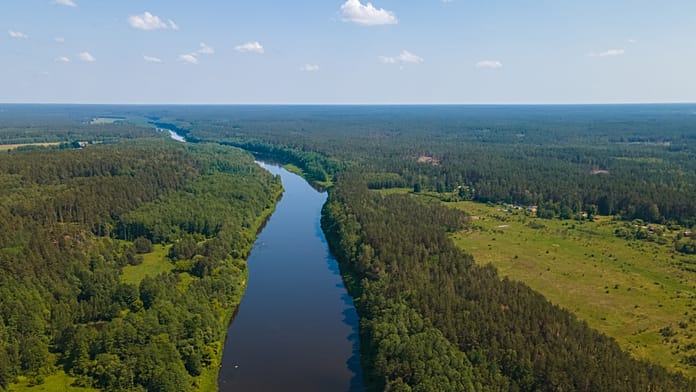
A Russian court sentenced a 68-year-old man who swam across the Nemunas River from Kaliningrad to Lithuania in an attempt to seek asylum to six years in prison, according to Lithuanian media Lrytas.
He was sentenced to six years in a maximum-security penal colony and barred from administering websites or online channels for three years following his release.
The man, identified by Russian media as Igor Yuryevich Odintsov, was convicted by the Baltic Fleet Military Court of “publicly justifying terrorism,” according to the court. He also holds “a negative attitude towards the state authorities of the Russian Federation” and is opposing Moscow’s war in Ukraine — what Moscow calls a “special military operation,” according to the court’s press release.
Court proceedings were suspended on September 17 after Odintsov went into hiding, according to Russian media ruwest.ru. That was also the day he crossed the Nemunas River and reached the Lithuanian side.
The head of the Lithuanian community in Kaliningrad, Sigitas Šamborskis, told Lrytas that he knew the man and said Odintsov had been trying to escape persecution.
“He had a case opened against him, which is why he swam across the Nemunas. He wanted to save himself,” Šamborskis said.
The man allegedly told Lithuanian authorities that he was fleeing Russia because of persecution over his activity on social media. But after assessing the circumstances, “inconsistent” information provided by the man and “information concerning the threat posed by this person if he were to enter the EU”, Lithuanian authorities decided to return him, a spokesperson for Lithuania’s State Border Guard Service, Giedrius Mišutis, said last month.
Šamborskis added that the Lithuanian side did not have sufficient grounds to keep him, as the Russian court case had not yet been concluded.
The 68-year-old was detained four days later, on September 21, and the court handed down its verdict at the next hearing, on September 30.
Christa Pike survives botched execution in Tennessee sparking legal turmoil
Media Lens: Christa Pike survives botched execution in Tennessee sparking legal turmoil
Christa Pike survives failed execution attempt in Tennessee.
Christa Pike survived a failed execution attempt in Tennessee. Her attorneys reported that she is angry and confused after the incident, leading to significant legal discussions surrounding the case, according to coverage in the New York Times and CNN.
What happened
Christa Pike survived a failed execution attempt in Tennessee, prompting her attorneys to express that she is currently feeling angry and confused. Legal experts indicate that this incident has sparked a significant legal and ethical discussion surrounding her case.
Pike’s lawyers believed she was brain-dead prior to waking up unexpectedly during the execution attempt, which has raised questions about the methods used and the protocols followed during the execution process. This situation has drawn widespread media attention and public scrutiny, highlighting the complexities of capital punishment in the United States.
Key facts
- Christa Pike survived a failed execution attempt in Tennessee.
- Pike’s attorneys claimed she was brain-dead before regaining consciousness unexpectedly.
- The execution attempt has sparked legal discussions regarding her mental state and the procedure itself.
- Pike expressed feelings of anger and confusion following the failed execution.
Where coverage differs
- The New York Times emphasizes Christa Pike’s emotional state, highlighting that she is angry and confused after the failed execution, while CNN focuses more on the legal implications of the event.
- WPRI.com foregrounds the failure of the execution process over Pike’s emotional reactions, presenting a more procedural perspective compared to The New York Times.
- CNN prioritizes the sensational aspects of Pike’s near-death experience and the public’s reaction, whereas WPRI.com tends to discuss the broader implications for the legal system.
One story, four angles
The New York Times – Live Updates: Christa Pike’s Lawyers Say She Is Angry and Confused After Failed Execution
Publication: The New York Times | Primary framing pattern: legal | Tone: serious | Intensity: 7/10 | Sentiment: mixed | Legal precision: high
Expand
Espresso Shot: The New York Times focuses on the emotional aftermath of a botched execution attempt of Christa Pike, highlighting her lawyers’ assertions of her confusion and anger. The narrative emphasizes the legal implications and the ongoing discourse surrounding capital punishment and its ramifications.
Publication emphasis: The legal and emotional turmoil surrounding Christa Pike following her failed execution.
Framing analysis: The emotional responses of Pike are foregrounded, with context about the failed execution providing secondary importance and a legal lens shaping the discussion.
Bias: Selection: Focuses on emotional responses and legal implications. Language: Serious and precise, emphasizing confusion and anger. Omission: Less focus on broader societal implications of executions.
Assessment: The outlet effectively communicates the emotional and legal complexities of the event while maintaining a serious tone.
CNN – Christa Pike’s attorneys believed she was brain-dead before she woke up ‘to the shock of everyone’
Publication: CNN | Primary framing pattern: moral | Tone: dramatic | Intensity: 8/10 | Sentiment: negative | Legal precision: moderate
Expand
Espresso Shot: CNN presents a dramatic account of the failed execution of Christa Pike, emphasizing the shocking moment she awoke after being presumed dead. This framing prioritizes moral outrage and raises questions about the ethics of capital punishment, casting a critical light on the justice system’s handling of the situation.
Publication emphasis: The moral ramifications and ethical concerns surrounding Pike’s failed execution attempt.
Framing analysis: The shock of Pike’s presumed death and subsequent revival is foregrounded, overshadowing legal technicalities, which are treated as secondary aspects.
Bias: Selection: Highlights emotional and moral outrage over procedural justice. Language: Dramatic and intense, creating an urgent tone. Omission: Dismissal of legal implications and procedural details.
Assessment: CNN successfully engages readers with an emotionally charged narrative, emphasizing moral dilemmas over legal discourse.
WPRI.com – Christa Pike is angry and confused after surviving execution attempt, attorney says
Publication: WPRI.com | Primary framing pattern: emotional | Tone: anxious | Intensity: 6/10 | Sentiment: mixed | Legal precision: moderate
Expand
Espresso Shot: WPRI.com portrays Christa Pike’s emotional state post-failed execution, highlighting the confusion and anger expressed by her attorneys. The focus is on Pike’s emotional distress, exploring personal responses rather than the legal implications of the failed execution.
Publication emphasis: The emotional turmoil faced by Pike and her lawyers following the execution attempt.
Framing analysis: The emotional reactions are front and center, while legal aspects are presented in a more superficial manner, allowing personal narratives to dominate the story.
Bias: Selection: Prioritizes personal feelings and reactions over procedural issues. Language: Anxious and concerned tones are evident. Omission: Lacks deeper legal analysis or context surrounding the execution protocol.
Assessment: WPRI.com effectively captures the emotional aftermath of the event, creating a relatable narrative that engages readers on a personal level.
Food for thought
The New York Times employs the strongest legal framing regarding Christa Pike’s execution mishap, emphasizing the complexity of her legal situation and the reactions of her attorneys, who portray her as bewildered post-attempt. Conversely, CNN takes a more escalatory tone, highlighting Pike’s confusion and anger, thereby amplifying the dramatic implications of the failed execution. The emphasis on emotional response in CNN’s report contrasts sharply with the more structured legal discourse in the Times. WPRI.com also reflects an urgent perspective, framing the incident as a legal storm surrounding Pike, adding to the atmosphere of crisis. The facts do not change. What changes is where scrutiny lands.
