- Political Corruption: Tulip Siddiq political career over
- Taiwan eyes defence spending hike to counter China pressure
- US and UK agree zero-tariffs on pharmaceuticals
- Ruben Amorim: Man United ‘steal’ set-piece routines from rivals
- Hong Kong high rise fire 13 arrested for suspected manslaughter as death toll hits 151
- Man City boss Guardiola backs England’s Tuchel on Foden position
- Darren Jones defends Rachel Reeves over claims she misled cabinet on tax rises
- McLaren to hold internal review into Qatar GP strategy mistakes
Axel Rudakubana sentenced to a minimum of 52 years Axel Rudakubana has been sentenced to 52 years behind bars for the murder of three little
Thursday’s news briefing
Prince Harry has settled his case with the owner of the Sun newspaper – News Group Newspapers (NGM). Harry reportedly received a £10+ million payout as well as an apology. The Murdoch-owned tabloid admitted it engaged in illegal practices to source stories about him.
The Southport killer is set to be sentenced today after pleading guilty to three counts of murder and terrorism charges – including making ricin. The 18-year-old is expected to receive a life sentence. An inquiry into the case began after it was revealed authorities already knew about Axel Rudakubana and he had been referred (but denied) to the government’s Prevent scheme – aimed at stopping people from becoming terrorists or supporting terrorism.
Leo Ross, 12, was stabbed to death on his way home from school in Birmingham yesterday. The country reacts to the news – amid fears of a growing knife crime crisis. A 14-year-old boy has been arrested.
Storm Éowyn is heading towards the UK with rare weather warnings being issued for Northern Ireland and parts of Scotland on Friday.
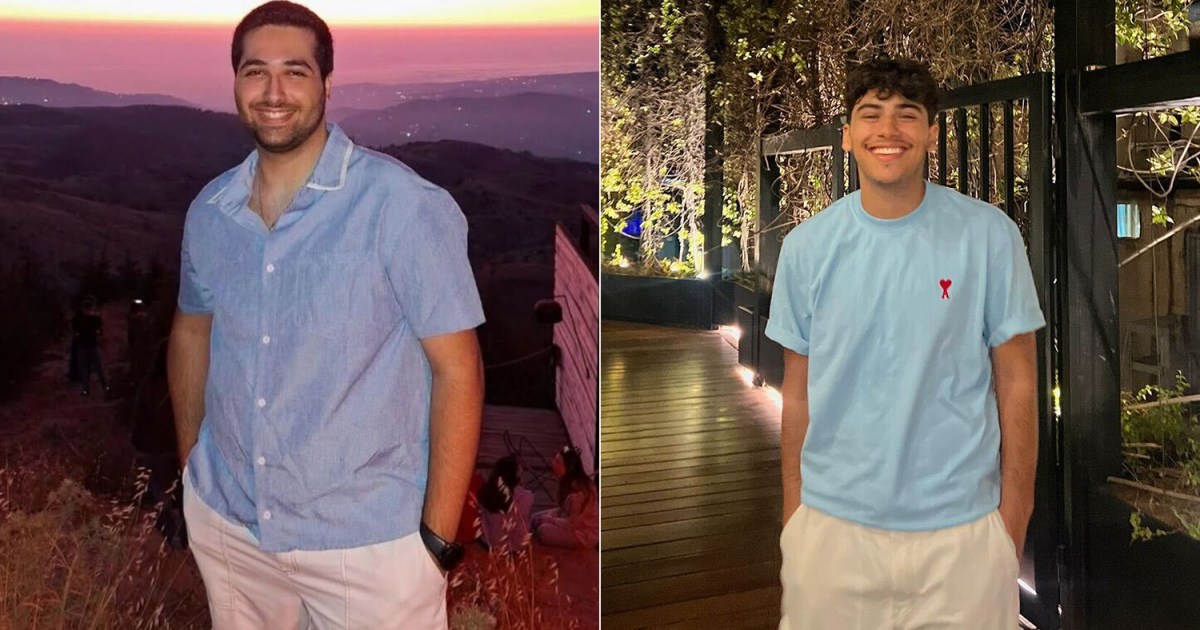
The fierce stench of rotten food and burned furniture greeted 19-year-old Fouad Abou Mrad and his father when they returned to their home in the southern suburbs of Beirut, a stark reminder of how Israeli attacks had upended their lives.
The student at Notre Dame University – Louaize and his family had abandoned their home in Dahiyeh during Israel’s bombing campaign in September.
“Seeing the place that I grew up in in that state was just shocking. I’ve never experienced that before in my life. It was straight out of [a] horror film,” he told Al Jazeera, adding that his home “smelled like dead bodies”.
Abou Mrad said he searched his destroyed home in early October for school supplies – his laptop and other essentials – because his university in the northern coastal city of Zouk Mosbeh was starting up courses again.
The learning and futures of Lebanese students had been disrupted by Israel’s bombardment of Lebanon with nearly half of the country’s 1.25 million students displaced, according to Lebanon’s Ministry of Education.
A temporary ceasefire between Israel and Lebanon’s Hezbollah group was implemented on November 27 but only after months of bombings that left a psychological toll on young people like Abou Mrad. He and other students are now trying to settle back into a regular routine and focus on passing their exams.
Abou Mrad, a hospitality and tourism management major, is just one of the hundreds of thousands of young people in Lebanon whose lives – and education – were upended by the conflict.
Abou Mrad felt afraid attending classes during the war, especially after seeing all of the damage so close to his home [Courtesy of Fouad Abou Mrad]
‘Nights from hell’
November 18 is a day Sajed Salem will never forget.
The 23-year-old southern Lebanese native lived alone on campus while attending Saint Joseph University of Beirut, located in the capital’s Ashrafieh area.
That week, Israeli forces had been bombing Beirut for days, what Salem called “nights from hell”.
Despite the intensifying bombardment, in-person classes had resumed, and on that Monday, he was sitting in his culinary arts class when explosions went off nearby. The blasts shook the building and the desks in the classroom.
“I was s***ting myself. I was crying, screaming,” Salem told Al Jazeera.
Salem studies culinary management and attended classes in person during the war [Courtesy of Sajed Salem]
‘Immense psychological toll’
According to Maureen Philippon, the Lebanon country director for the Norwegian Refugee Council (NRC), living through conflicts like these hinders academic progress and burdens students psychologically.
“Constant exposure to violence, displacement and loss leaves [students] highly stressed and anxious, impairing their ability to focus, learn and retain information,” Philippon told Al Jazeera, adding that the “psychological toll is immense”.
These effects continue even after the conflict has ended.
“In Tyre, I saw children freaking out when they would hear a plane, putting their hands on their ears and looking around in panic,” she said, referring to the city in southern Lebanon that Israel heavily bombed.
Exams in a time of war
After the blasts shook the walls of his classroom, Salem fled the same day to Chouf in central Lebanon, where some of his relatives were taking refuge.
“I called my cousin. I told him to immediately come here and pick me up,” he said.
Salem’s village of Dweira in southern Lebanon was among the first to be bombed when Israel escalated the war on September 23. His mother and siblings got trapped in their home due to the strikes, Salem said.
Alone in Beirut, he couldn’t reach them by phone until the next day, an agonising experience he said he would not wish on his “worst enemy”.
After leaving for Chouf, Salem’s problems weren’t over. School continued despite the bombings, and he was forced to travel back to Beirut at least once or twice a week for exams.
Salem said that during the constant bombing, his teacher still held an exam despite students asking for a reprieve. He, along with many of his classmates, failed the test.
“The exam was not that easy. He [the teacher] made it hard,” Salem said. “I don’t know why. We told him, ‘Look at the situation. Please make it a bit easy for us.’”
The right to education
While Salem was unhappy with his teacher’s actions, experts said educators are essential in helping students adapt to the challenges of war.
However, Philippon noted that conflicts also affect teachers, making it necessary for governments and humanitarian agencies to provide support and resources.
According to Ahmed Tlili, an associate professor of educational technology at Beijing Normal University whose research focuses on education in warzones, international law does not adequately protect education during war.
While international humanitarian law protects children’s right to education in armed conflicts, Tlili said these laws usually are not implemented.
“This underscores the need for concerted efforts to ensure that international laws protecting education, especially in war regions, are not merely rhetorical gestures but are actively upheld, enabling equitable access to education for all, even in the midst of conflict,” he told Al Jazeera.
International humanitarian law also prohibits attacks on schools and universities, classifying such acts as war crimes under the Rome Statute of the International Criminal Court, the experts said.
Ensuring that education is provided during wars is the responsibility of those outside of warzones, Tlili said, providing an example of opportunities afforded to some students from Gaza.
“We can see that in [the case of Gaza]several Arab universities have opened their doors to enrol Palestinian students without any restrictions,” he explained.
“We have also seen that several international course providers have waived fees for accessing courses for Palestinian students and teachers, allowing them to freely access educational resources and teaching materials.”
The ruins Salem witnessed during Israel’s war on Lebanon [Courtesy of Sajed Salem]
‘Art, studies, our future’
Abou Mrad feels the struggle to learn during the conflict was “unfair” to him and his fellow students.
They spent their nights in terror, anguishing over whether they would see each other or their families again when they should have focused on “art and studies and our future”.
He said he is hoping for some normalcy to return to Lebanon.
“We don’t know what can come next, … but we have to try to move forward normally,” Abou Mrad said.
Others, like Salem, said living in southern Lebanon especially hasn’t been “normal” since Israel’s war on Gaza began. Even with the ceasefire, the violence hasn’t stopped, and Israel is accused of violating the agreement hundreds of times.
And now, with the toppling of Bashar al-Assad in December in neighbouring Syria, Salem is even more uncertain about what will happen next.
“I’m happy for our Syrian brothers and sisters who got their freedom from the Assad regime and everything,” Salem said, “but we have to pay attention to what comes next. … It’s [going to] affect us as Lebanese.”
Thursday’s headlines make for interesting reading. Only four national newspapers lead with the publisher of The Sun, News Group Newspapers (NGM), apology and payout to Prince Harry. It’s little surprise The Sun newspaper itself doesn’t acknowledge the news until page six.
Harry’s lawsuit against NGN is a huge victory with the Murdoch-owned tabloid admitting it engaged in illegal practices to source stories about him.
Of the four newspapers that lead with the story, The Guardian, The i and The Independent note the historical nature of the win, which saw NGN do something they rarely do – apologise. The Daily Telegraph unsurprisingly has a different take. The paper calls it a ‘climb down’ from Harry and lightly suggests he was seeking a bigger payout than what his brother received, questioning why he had all of a sudden struck a deal rather than complete his quest of holding the tabloids to account.
Away from Harry, there is a mixture of mostly domestic news including reports the Royal Navy spotted a Russian “spy ship” in UK waters, various reports of illegal immigrants, ISIS and “fears” over UK security. Several papers also report on the UK economy.
A 12-year-old boy is pictured on many front pages after he was stabbed to death on his way home from school. A 14-year-old boy has been arrested.
The back pages lead with last night’s Champions League matches – and how the English clubs fared. Man City threw away a 2-0 lead to lose 4-2 to PSG. Arsenal won their match, all but securing a place in the knockouts.
Last night’s Champions League action domiantes much of social media in the UK today as well as the latest Premier League transfers.The public reacts to Prince Harry’s win over the Sun newspaper as well as the incoming storm Eowyn – set to hit Ireland before moving on to Britain.The setencing of the Southport killer also trends this morning as the publci awaits the sentencing verdict.
UK leaves the door open on joining Europe customs scheme
FT.com Tweet
Consumer confidence in the health of the UK economy slumped in January, pointing to further headwinds in the coming months.
CITY AM Tweet
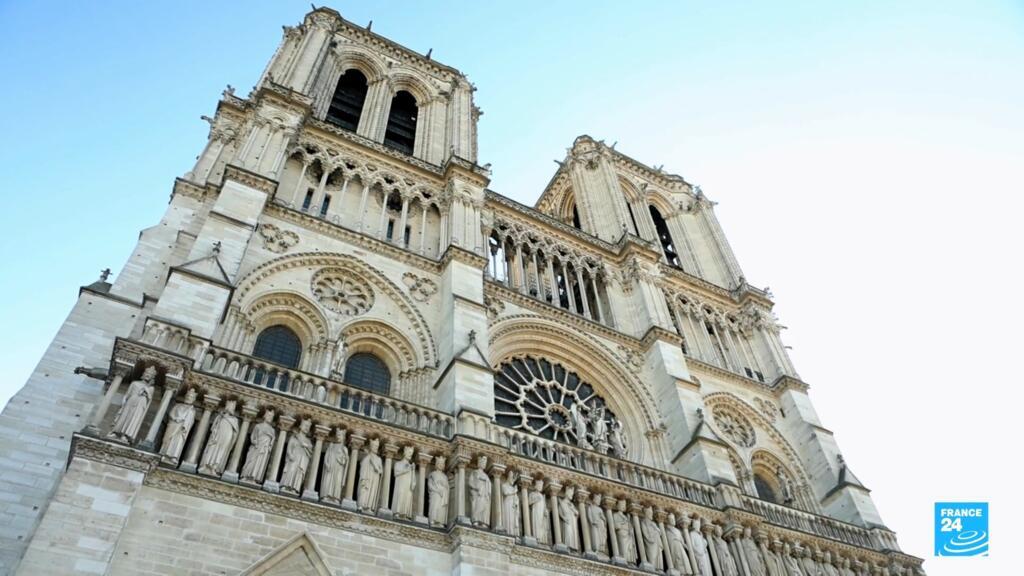
In this week’s Paris des Arts, A visit to Notre-Dame Cathedral takes centre stage as we take a trip down memory lane and delve into the history of Paris’s gothic gem with architectural historian Mathieu Lours.
A visit to Notre-Dame Cathedral
A visit to Notre-Dame Cathedral is a romance with its history, inspiring novels and tragedy through the ages. We meet Henri Chalet, the Director of the Maîtrise Notre-Dame singing school and follow his work with the choir during their rehearsals. And, in “From Paris with love”, we discover a reading of writer Sylvain Tesson’s works on stage inspired by his love of Notre-Dame Cathedral.
Notre Dame de Paris is a cathedral church in Paris. It is the most famous of the Gothic cathedrals of the Middle Ages and is distinguished for its size, antiquity, and architectural interest.
The cathedral was initiated by Maurice de Sully, bishop of Paris, who about 1160 conceived the idea of converting into a single building
From Paris with love
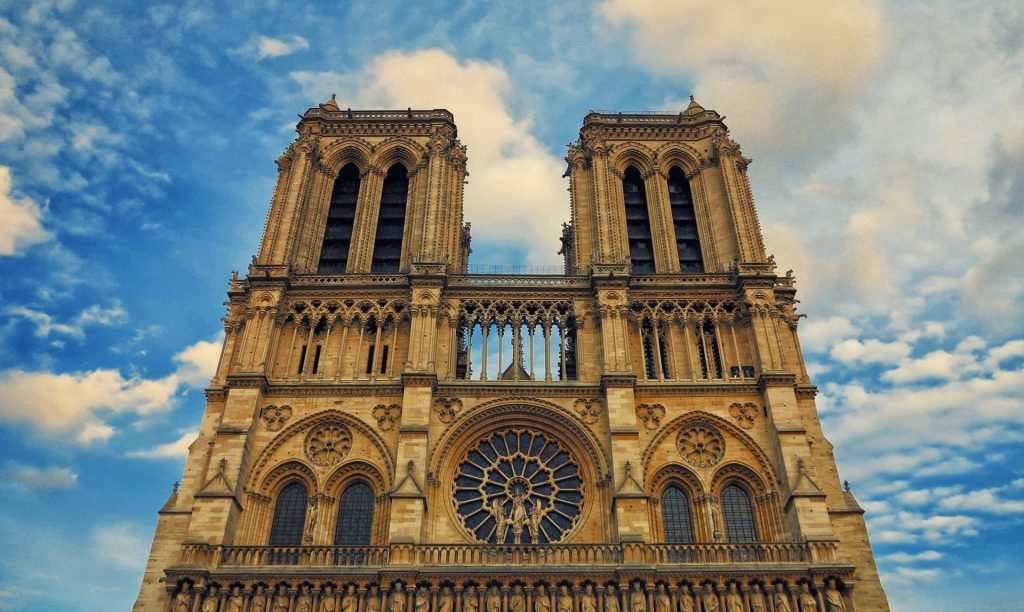
The Cathedral of Notre Dame is a masterpiece of Gothic architecture and one of the most visited monuments in for many romantics, Paris is a mythical city where stories are made, and certainly Notre Dame is part of this timeless beauty.
The most famous of the Gothic cathedrals
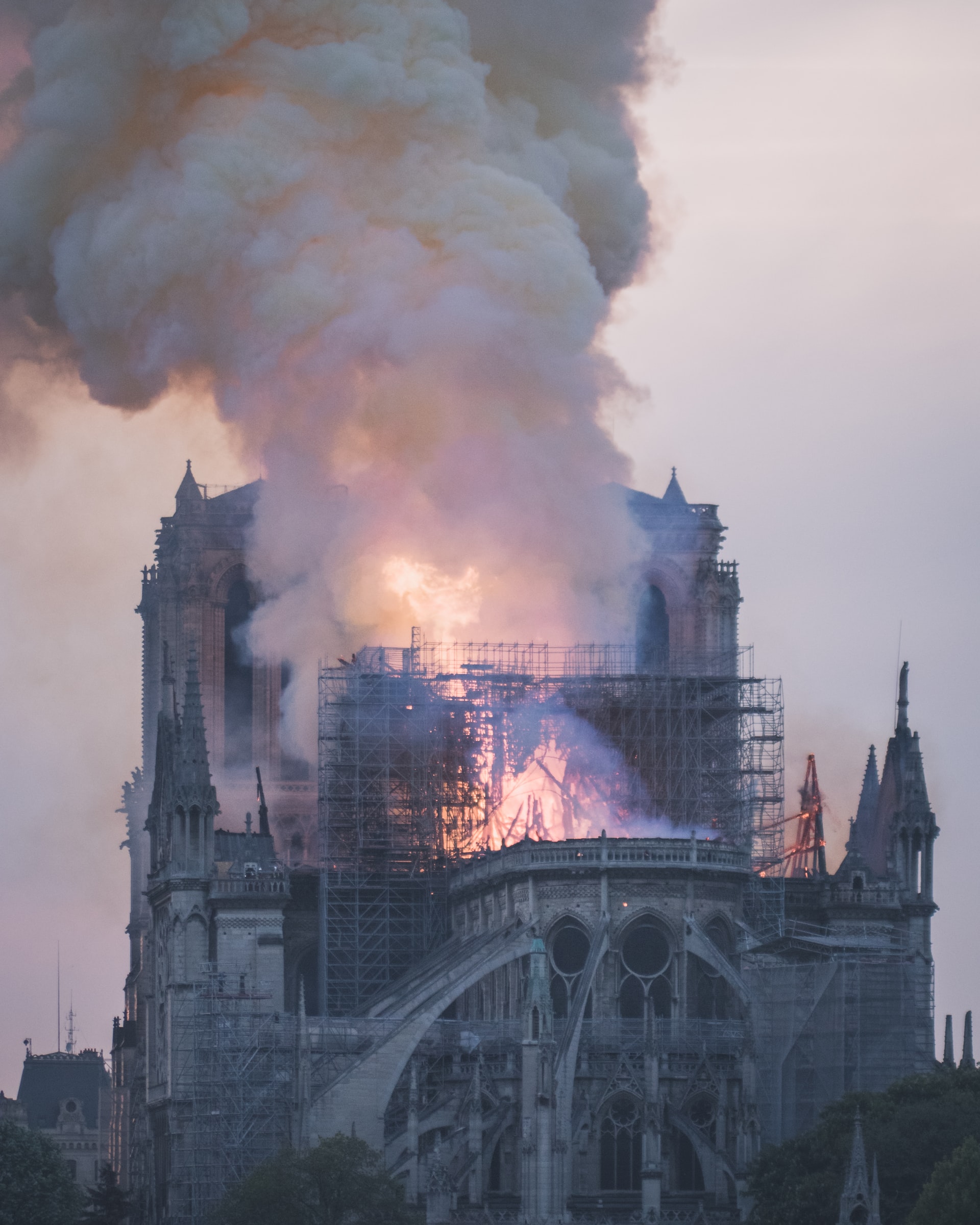
But despite the devastating 2019 fire, Notre Dame has survived to remain an enchanting Parisian monument that travelers still dream of visiting as we did with historian Mathieu Lours.
The historian paints a picture of where it’s located, it is like he is painting a picture on a blank canvas; situated on Paris’s picturesque island, Île de la Cité, Notre Dame sits quite literally in the heart of Paris. Yes, that is where Notre Dame de Paris resides, but don’t be surprised if you hear tales of other Notre Dames in other French cities.
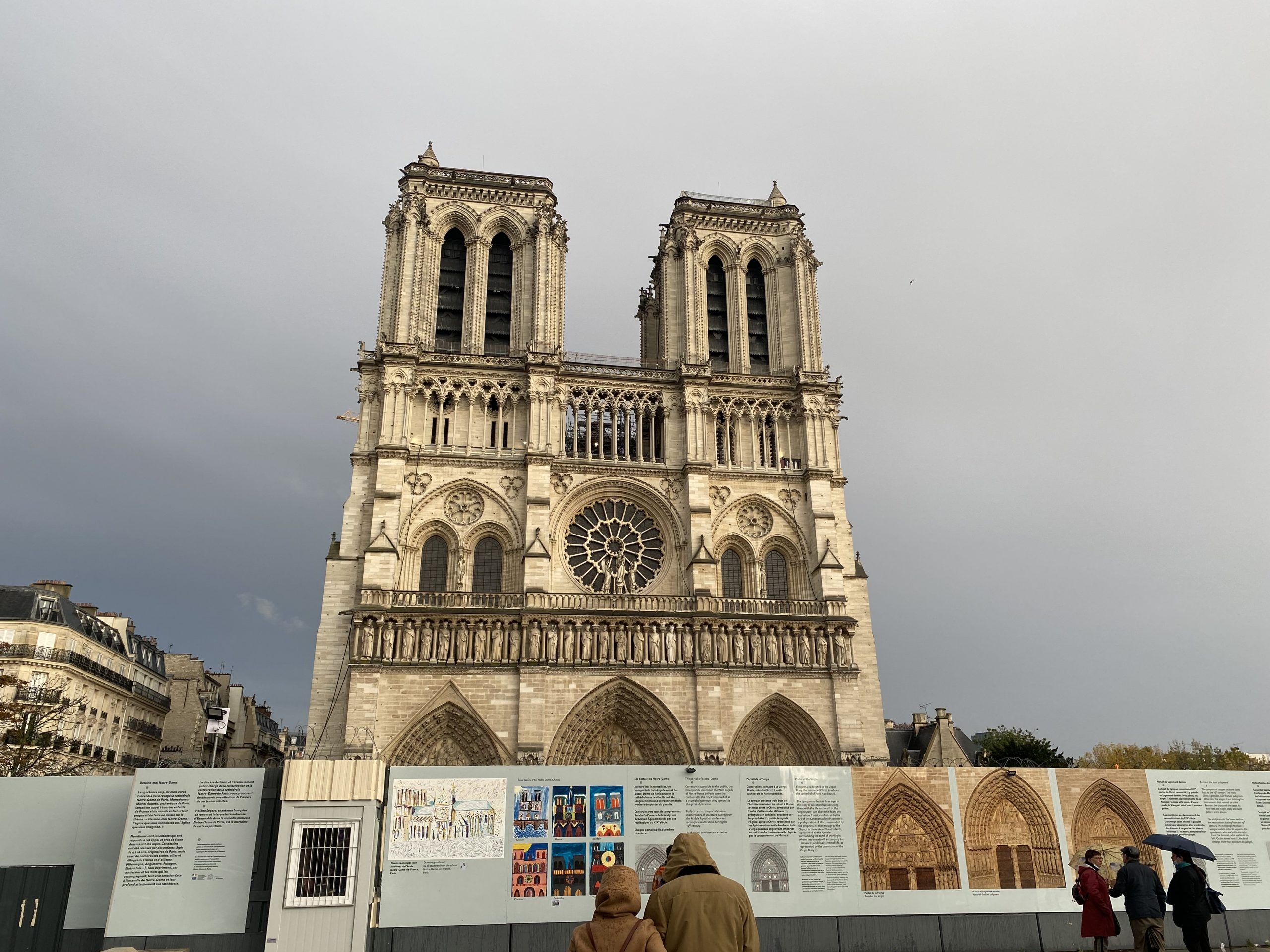
What does Notre Dame de Paris mean?
“These are not imposters of the Parisian cathedral. Notre Dame de Paris, literally translated, is “Our Lady of Paris.” Notre Dame, therefore, is the name given to the central church in many French cities and towns” says Henri Chalet.
When the cathedral’s plot of land was first considered for construction in the mid-12th century, it had already been home to a Roman temple, and later two basilicas that had themselves eroded with time. So when Pope Alexander III ordered the laying of the cathedral’s foundation only years later, the cathedral became the fourth chapter in a long line of religious gems to be erected on that spot.
“This majestic building has history seeping out of corner, every turn is almost better than the one before. That’s partly because of the history of damages it has endured. As a centerpiece of French history and symbolism, it has always been under threat of attacks” said the historian Mathieu Lours.
Damaged during the French Revolution, the cathedral was restored in the 19th century by the architect Viollet-le-Duc. But they kept the damaged statues at the front doors, known as portals, as a reminder of the devastating effects of the French Revolution.
Notre-Dame underwent major restorations by the French architect Eugène-Emmanuel Viollet-le-Duc in the mid-19th century. The popularity of Victor Hugo’s historical novel Notre-Dame de Paris (1831), wherein the cathedral is the setting, was said to have inspired the renovations.
The stained glass windows of Notre Dame, particularly the three rose windows, were long considered among the best features of the cathedral. They again have been restored over the years but as you embark to the top the towers you can enjoy a Panoramic view of Paris.
After the fire of 2019, Notre Dame was closed and the task of restoring its former glory from the fire was under way.
The cathedral officially reopened Saturday, Dec. 7, 2024, with a special reopening ceremony with lots of special guests including President Macron.
And on December 8, 2024 Notre-Dame was reopened to the public, to much fanfare following a restoration project estimated to cost upward of €700 million ($767 million).
Notre-Dame Cathedral suffered damage and deterioration through the centuries but now the majestic building has been restored to its former glory.

Political Corruption: Tulip Siddiq political career over
Cliff Notes – Siddiq over corruption A Bangladesh court convicted Tulip Siddiq and Sheikh Hasina, sentencing Siddiq to two years and Hasina to five in
What to Watch
Amazon prime - TV & Netflix
What to Watch
Love Sports
- Good News
- Readers Digest
Subscribe to Updates
Get the latest creative news from FooBar about art, design and business.