



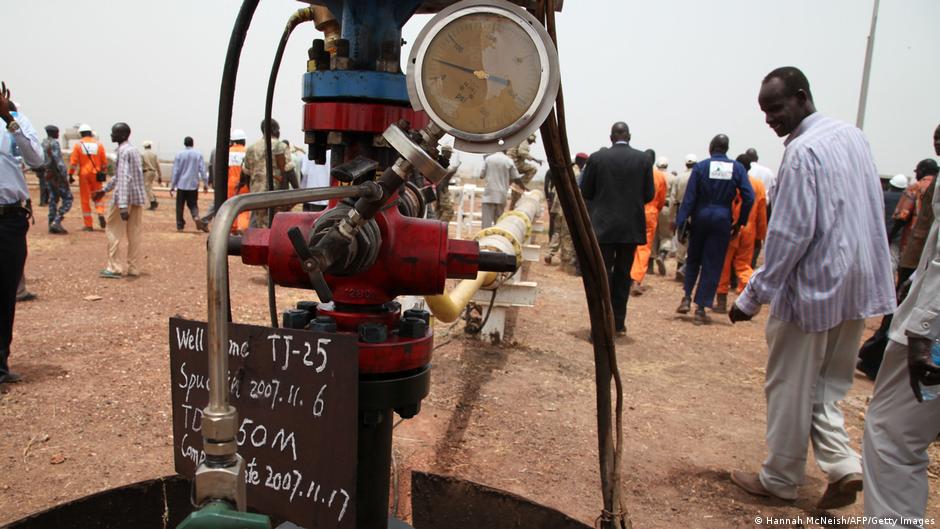
South Sudan, the world’s youngest nation, has resumed oil production after nearly a year-long shutdown caused by the ongoing conflict in neighboring Sudan.
The announcement of the restart, which began on January 8, 2025, has been met with optimism as well as skepticism, as the country continues to struggle with chronic economic challenges, corruption, and institutional weaknesses.
South Sudan’s minister of petroleum, Puot Kang Chol, believes, however, that fresh opportunities await.
“We know that our economy is suffering,” he said during a press briefing in Juba. “We believe that with resumption, resources will be back on the table.”
A lifeline for the government?
Chol confirmed the resumption of oil production by facilities operated by the Dar Petroleum Operating Company (DPOC), a consortium running the country’s oil production, where the government only holds an 8% share.
China and Malaysia together are the biggest shareholders of DPOC.
“The Ministry of Petroleum and partners would like to declare that the kick-off date for DPOC resumption is as early as tomorrow,” Chol announced just before the restart.
The decision came after Sudan lifted a nearly year-long ban on oil exports from South Sudan, citing force majeure due to the civil war in Sudan as its justification.
Initially, production output is targeted at 90,000 barrels per day, down from the pre-shutdown levels of over 150,000 barrels per day.
“This is what the pipeline will accommodate in the first phase. And then thereafter, if we have the capacity to increase more than that, we shall do so,” Chol added.
Sudan and South Sudan: Codependent neighbors
South Sudan holds about three-quarters of the oil reserves of the former Sudan, which it eventually broke away from after lengthy negotiations and multiple civil wars in 2011.
However, it remains dependent on Sudanese pipelines and export infrastructure to ship its crude oil to global markets via Port Sudan.
Despite its small share, South Sudan relies on oil exports for over 90% of its national revenue.
Despite the circumstances, the resumption of oil production has provided the Juba administration with a much-needed lifeline amid a major economic downturn.
No trickle-down economics in South Sudan
While the government is celebrating the resumption as a major milestone, analysts and citizens are less enthusiastic about the potential benefits for the wider population.
Boboya James Edimond, an independent political and economic analyst, called the development a mixed blessing: “This resumption of oil means good news for the government of South Sudan, which has been struggling for many months since the conflict in Sudan erupted,” he told DW.
“But for the people of South Sudan, the resumption of oil has not actually been good news.”
Edimond explained that, historically, rises in oil revenues have tended to fuel already-endemic corruption while increasing conflictand worsening societal inequalities.
“(I)t can only be good news if these oil resources are going to finance the national budget in a transparent and accountable manner … to address the current, worsening conditions of the people of South Sudan,” he stressed.
Freelance journalist Patrick Oyet meanwhile told DW that even during periods of active oil production in South Sudan, the benefits rarely trickle down to the public, as the African country continues suffering from widespread poverty and rising inflation, not to mention the fact that many civil servants have gone without their salaries for over a year.
“Most government institutions are not working,” Oyet said, adding that “even when oil was flowing, the economy was not doing well. Inflation was rising, people’s purchasing power had really reduced, and taxes were high.”
A small but struggling economy
South Sudan’s overall economy has suffered immensely during the yearlong shutdown. The country’s GDP has contracted by 5% since the conflict in Sudan began, while the oil and gas sectors shrunk by 70%.
South Sudan’s national budget, currently at $1.3 billion (€1.25 billion), is already among the lowest in the East African region despite its oil wealth. Neighboring Kenya, Uganda, and Tanzania have national budgets ranging from $18 billion to $31 billion.
“Poor governance and weak institutions contributed to a big mess within the oil industry,” Edimond said, adding that when South Sudan gained independence, there had been “good prospects of working with international partners to ensure the oil benefits every South Sudanese.”
He also highlighted the role of geopolitics, including complications with China, Russia, and Western actors, which have discouraged foreign investment in South Sudan’s oil sector.
“And because of that, it has made the government of South Sudan and South Sudan as a country and member of East African community, the weakest financially,” he said.
Impact of conflict in Sudan
Edimond stressed that South Sudan has to diversify its economy and reduce its dependence on oil as its chief source of revenue. “What the government needs to do is venture into other sectors such as gold mining, forestry, trade, and land oil revenue,” he told DW
He also warned of the potential misuse of oil proceeds, expressing concerns that funds could be diverted to bribe factions in Sudan, including the paramilitary Rapid Support Forces (RSF), whose civil war against government forces has resulted in the displacement of millions of people from Sudan into neighboring regions, including South Sudan.
In addition to the strain of this refugee influx, Edimond highlighted South Sudan’s interest in keeping the pipelines through Sudanese territory running with as little disruption as possible, which could mean cozying up to the RSF in certain areas.
“(S)ome areas are controlled by the RSF and some areas by the armed forces,” he highlighted, adding that the conflict in Sudan is gravely affecting the entire region.
While the resumption of oil production in South Sudan may offer some hope for a nation battered by economic crises and political instability, it also paves the way for longstanding issues like corruption and poor governance to resurface.
In Edimond’s view, there’s only hope “if the oil can be utilized to eradicate poverty.”
Edited by: Sertan Sanderson
Can oil production save the economy? – DW – 01/30/2025