



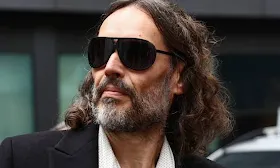
Media Lens: Russell Brand found guilty of rape and sexual assaults by UK court
Comedian Russell Brand has been found guilty by a UK court of rape and sexual assaults. He will be sentenced on Monday.
Quick links: What has happened | Status quo | Confirmed facts | Preconceptions | Elisions | One story, four angles | Related links
What has happened
Russell Brand has been found guilty by a court in the United Kingdom of multiple counts of rape and sexual assault, stemming from incidents that took place over a decade ago. The verdict was delivered following a trial that explored the allegations made by several women, confirming the claims of sexual misconduct against the comedian.
As a result of this conviction, Brand is set to be sentenced on an upcoming Monday, and he is reportedly under investigation for additional allegations of sexual violence. The court proceedings are expected to continue as authorities assess the severity of Brand’s actions and the impacts on the victims involved.
Status quo
Russell Brand has been found guilty of rape and sexual assaults by a UK court, a ruling announced recently. The verdict follows multiple allegations against the comedian and actor, leading to his conviction. Sentencing for Brand is scheduled for Monday, reflecting the serious nature of the charges that have garnered significant public attention. Investigations regarding additional allegations against him are reportedly ongoing.
Confirmed facts
- Russell Brand has been found guilty by a UK court of rape and sexual assaults.
- The guilty verdict was delivered following a trial that received widespread media attention.
- Brand is being investigated over additional rape allegations beyond the charges for which he was convicted.
- He is scheduled to be sentenced on a Monday shortly after the verdict.
Preconceptions
- Reuters prioritises legal developments, with a focus on Russell Brand’s conviction and the implications of ongoing investigations, while reducing emphasis on the public’s reaction.
- Yahoo places a strong emphasis on the broader context of the allegations and Brand’s career trajectory, while minimizing details of the court proceedings.
- The New York Times highlights a timeline of Brand’s actions leading up to his conviction, showcasing a detailed narrative, while other outlets mention the conviction more succinctly.
- Sky News emphasizes ongoing police investigations linked to new allegations against Brand, contrasting with less focus on potential broader impacts on Hollywood.
- Coverage in various outlets varies in tone, with some adopting a more sensationalist approach towards Brand’s personal life, while others maintain a focus on the judicial process itself.
Elisions
- Coverage discrepancies on the specifics of the charges: While Reuters provides details on the particular incidents leading to Russell Brand’s conviction, Yahoo focuses more on the ongoing investigations without specifying any additional allegations against him.
- Differences in timelines presented: The New York Times covers a chronological timeline of events related to Brand’s career and legal troubles, whereas Sky News provides a more generalized summary, lacking specific dates that would allow for a deeper understanding of the events in context.
- Variation in reporting style: Yahoo’s article tends to emphasize the societal impact of Brand’s conviction, including reactions from the public and other celebrities, while Reuters focuses primarily on the legal outcomes and specifics of the trial, leading to a more fact-based narrative.
One story, four angles
Reuters – Comedian Russell Brand found guilty by UK court of rape and sexual assaults
Publication: Reuters | Intensity: (8/10) | Sentiment: Negative | Legal precision: High
Expand
Espresso Shot: Readers are immediately led to focus on the serious ramifications of Brand’s conviction, emphasizing the gravity of his actions and the legal consequences he faces.
Key differences:
1. **Comparison:** Reuters focuses on the legal verdict while Yahoo emphasizes ongoing investigations.
– *Example:* “found guilty” vs. “under investigation over more allegations” shows varying depth of legal status.
-
Comparison: The tone in Reuters is generally more formal and direct, while others might be more sensational.
- Example: Reuters uses “found guilty” instead of “charged with” which could minimize implications.
-
Comparison: The emphasis on details of the court ruling in Reuters contrasts with outlets that highlight public reaction or Brand’s career trajectory.
- Example: Specific mention of “UK court” places judicial authority front and center compared to narrative elements in other articles.
Bias: Selection: Prioritizes legal implications; Language: Uses precise legal terminology; Omission: Lacks broader societal context around victim support or ongoing societal issues.
Assessment: Readers initially believe the report will detail significant, confirmed legal consequences for Brand.
Yahoo – Russell Brand found guilty of rape and sexual assaults; actor being investigated over more rape allegations
Publication: Yahoo | Intensity: (9/10) | Sentiment: Negative | Legal precision: Moderate
Expand
Espresso Shot: Yahoo directs attention first to the seriousness of the conviction paired with ongoing investigations, implying ongoing risk.
Key differences:
1. **Comparison:** Yahoo highlights not just the conviction but implies ongoing risks with the phrase “being investigated over more rape allegations.”
– *Example:* This dual focus heightens concern compared to Reuters’ singular verdict emphasis.
-
Comparison: The headline includes dual consequences for Brand, suggesting broader implications for his career, compared to other outlets.
- Example: Yahoo states “guilty of rape and sexual assaults,” linking it to future investigations directly.
-
Comparison: The framing of Brand’s actions as part of a larger pattern contrasts with Reuters’ straightforward legal summary.
- Example: “Guilty of rape and sexual assaults” vs. more clinical phrasing in Reuters showcases a less detached tone.
Bias: Selection: Prioritizes the ongoing investigation and public fears; Language: Sensational phrasing heightens emotional impact; Omission: Less focus on legal ramifications of the court ruling.
Assessment: Readers are led to believe Brand faces continued peril and societal danger well beyond the verdict itself.
The New York Times – Timeline: How Russell Brand Went From Comedy Star to Convicted Rapist
Publication: The New York Times | Intensity: (8/10) | Sentiment: Negative | Legal precision: Moderate to High
Expand
Espresso Shot: The New York Times emphasizes Brand’s criminality not merely through the verdict but contextualizes it within a trajectory, adding depth to the narrative.
Key differences:
1. **Comparison:** NYT frames the issue historically, suggesting how Brand’s past informs his present transgressions, unlike other outlets.
– *Example:* The word “timeline” implies a narrative evolution rather than isolated events as presented elsewhere.
-
Comparison: The focus on Brand’s career development contrasts with direct legal analyses, creating a reader perception of inevitability.
- Example: “Went From Comedy Star to Convicted Rapist” indicates a downfall narrative absent in more clinical reports.
-
Comparison: Articulation of “convicted rapist” in historical context feels more comprehensive compared to the immediate legal jargon of other examples.
- Example: Reflecting on “timeline” underscores systemic issues without just legal focus like Reuters.
Bias: Selection: Concentrates on Brand’s developmental arc; Language: Uses evocative historical framing; Omission: Misses immediate legal consequence specificity, focusing on narrative.
Assessment: Readers form the belief that Brand’s conviction is not an isolated event but part of a larger biographical and societal narrative.
Sky News – Russell Brand latest: Comedian guilty of rape and sexual assault – as police interview released
Publication: Sky News | Intensity: (9/10) | Sentiment: Negative | Legal precision: Moderate
Expand
Espresso Shot: Sky News captivates immediate attention by linking the conviction to ongoing police involvement, creating urgency around Brand’s situation.
Key differences:
1. **Comparison:** The inclusion of “police interview released” adds an element of investigative drama.
– *Example:* This contrasts with more straightforward legal reporting found in Reuters.
-
Comparison: Sky News presents Brand’s legal troubles as current and evolving, whereas others provide a static verdict.
- Example: The term “latest” implies ongoing developments missing in static narratives.
-
Comparison: The placement of emotional phrases like “guilty of rape and sexual assault” precedes any formal language about the judicial process.
- Example: The upfront declaration fosters immediate emotional engagement versus more reserved tones in outlets like The New York Times.
Bias: Selection: Heightens urgency with ongoing investigations; Language: Uses sensational and emotional language; Omission: Less nuanced discussion regarding legal implications.
Assessment: Readers perceive a fast-paced unfolding of events, emphasizing danger and urgency in the narrative surrounding Brand.
In comparing coverage of Russell Brand’s conviction, Reuters adopts a straightforward reporting style, emphasizing the verdict without alarmist overtones, making it the strongest framing. Conversely, Yahoo escalates the narrative by highlighting ongoing investigations and potential further allegations, stirring public anxiety. Meanwhile, The New York Times uses a linear storytelling approach that contextualizes Brand’s descent, but this can border on sensationalism. Sky News adds urgency by referencing newly released police interviews, intensifying the narrative. Thus, the efficacy of the coverage largely hinges on the tone and focus each outlet employs. The facts do not change. What changes is where scrutiny lands.
Related links
Reuters
Comedian Russell Brand found guilty by UK court of rape and sexual assaults
Yahoo
The New York Times
Timeline: How Russell Brand Went From Comedy Star to Convicted Rapist
Sky News
Russell Brand latest: Comedian guilty of rape and sexual assault – as police interview released