



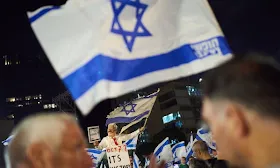
Media Lens: Israel’s first national election since October attacks set for November
Israel prepares for its first national election since the attacks on October 7. This election occurs in a highly charged atmosphere marked by significant political implications for the country’s future.
Quick links: What has happened | Status quo | Confirmed facts | Preconceptions | Elisions | One story, four angles | Related links
What has happened
Israel is set to hold its first national election since the October 7 attacks, an event that has heightened political tensions across the country. The election will serve as a significant moment for Prime Minister Benjamin Netanyahu and his administration, as citizens are expected to weigh the effectiveness of the government’s response to recent security challenges during their voting decisions.
This election will focus on key issues related to defense and security, particularly in light of the ongoing conflict and national security concerns. Candidates are preparing campaign strategies that highlight their positions on these crucial topics, influencing public opinion and voter turnout as Israel approaches this pivotal electoral process.
Status quo
Israel is set to hold its first national election since the attacks on October 7, 2023. This election comes after significant political turmoil and is seen as critical for the future of the government and its leadership under Prime Minister Benjamin Netanyahu. The election will address pressing national security issues and the ongoing geopolitical situation in the region.
Confirmed facts
- Israel is preparing for its first national election since the October 7 attacks.
- This election is viewed as crucial and may have significant implications for current Prime Minister Benjamin Netanyahu.
- The election is characterized as one of the most important in Israel’s history.
- Several news sources report that this election is expected to reflect public opinion on Netanyahu’s government.
- Multiple news platforms highlight that the results could influence Israel’s future political landscape significantly.
Preconceptions
- AP News prioritises the upcoming national election in Israel, framing it strongly around the direct impacts of the October 7 attacks, while focusing on the political dynamics involving Netanyahu.
- The New York Times emphasizes opinion pieces reflecting broad societal sentiments toward Netanyahu’s leadership and its effects on the election, whereas it reduces coverage on procedural aspects of the election itself.
- CNN prioritises the significance of the election as a pivotal moment in Israeli politics, offering extensive background context, while giving less attention to individual candidate profiles or minor party platforms.
- The Guardian focuses on the historic importance of the election, underlining its potential consequences for future governance, and reduces coverage of voter turnout and logistical details.
Elisions
- AP News covers the upcoming Israeli elections highlighting the impact of the October 7 attacks, while CNN emphasizes the election’s significance by presenting it as the most important in years, showing differing focuses on recent events and historical context.
- The Guardian provides an analysis of the broader implications of the election and compares Netanyahu’s long tenure with potential changes, whereas The New York Times’ piece offers a more personal perspective on support for Netanyahu, creating a gap in the portrayal of public opinion.
- CNN discusses the stakes involved in the elections more broadly, while The New York Times focuses on the personal motivations behind Netanyahu’s support, leading to different narratives on voter sentiment and political ideology.
One story, four angles
AP News – A look at the main issues in Israeli elections seen as a referendum on Netanyahu
Publication: AP News | Intensity: (6/10) | Sentiment: Neutral | Legal precision: High
Expand
Espresso Shot: The focus initially rests on Netanyahu’s leadership amidst election controversies following the October 7 attacks.
Key differences:
1. **Comparison of Context:** AP emphasizes the “referendum on Netanyahu,” while others focus on broader election stakes.
2. **Example of Placement:** AP places Netanyahu’s influence front and center, whereas CNN delves into broader electoral implications.
3. **Specific Word Choice:** AP uses “issues” to suggest ongoing debates, contrasting with CNN’s “important election,” underscoring immediacy.
Bias: Selection: Emphasizes Netanyahu’s role over others | Language: Neutral descriptors, avoids inflammatory terms | Omission: Lacks detail on candidate alternatives.
Assessment: Readers are led to believe the election heavily revolves around Netanyahu’s capabilities and controversies.
The New York Times – Opinion | The Millions of Israelis in Netanyahu’s Corner
Publication: The New York Times | Intensity: (7/10) | Sentiment: Opinion | Legal precision: Moderate
Expand
Espresso Shot: Focus is directed toward the significant support Netanyahu garners from a substantial segment of the population.
Key differences:
1. **Comparison of Tone:** The NYT’s opinion highlights support for Netanyahu as symbolic, unlike AP’s neutral reporting.
2. **Example of Wording:** NYT uses “millions” to signify an extensive backing, contrasted with AP’s focus on issues.
3. **Placement variation:** NYT contextualizes support as part of a broader commentary on Israeli society, diverging from election-centric reports.
Bias: Selection: Focuses on Netanyahu’s supporters, potentially neglecting dissenting opinions | Language: Empathetic language toward supporters | Omission: Minimal exploration of opposition candidates.
Assessment: The reader is inclined to see the election as reflective of strong, popular support for Netanyahu.
CNN – Israel is holding its most important election in years. Here’s what’s at stake
Publication: CNN | Intensity: (8/10) | Sentiment: Urgent | Legal precision: Moderate
Expand
Espresso Shot: The reader is quickly directed to the potential implications and stakes of the upcoming election.
Key differences:
1. **Comparison of Urgency:** CNN denotes the election as “most important,” exhibiting a stronger call to urgency compared to AP and NYT’s tones.
2. **Example of Specific Wording:** CNN emphasizes “what’s at stake,” suggesting immediate consequences, unlike AP’s broader issue lens or NYT’s focus on Netanyahu’s support.
3. **Gravitas vs. Opinion:** CNN provides a factual base for urgency, while NYT explores emotional ties, setting a different narrative tone.
Bias: Selection: Prioritizes urgency of the election over regular reporting | Language: Heightened urgency attracts reader attention | Omission: Less focus on candidate backgrounds compared to context.
Assessment: Readers perceive the election as critical, emphasizing immediate stakes over individual candidates’ qualities.
The Guardian – What you need to know about the most consequential election in Israel’s history
Publication: The Guardian | Intensity: (9/10) | Sentiment: Urgent | Legal precision: Moderate
Expand
Espresso Shot: The Guardian emphasizes the significance of the upcoming election, framing it within a historical context.
Key differences:
1. **Comparison of Consequential Nature:** The Guardian characterizes the election as “most consequential,” elevating its importance compared to CNN’s “important.”
2. **Example of Wording and Urgency:** The use of “need to know” gives it a more educational tone, implying crucial insights, unlike AP’s straightforward reporting.
3. **Framing within History:** The Guardian’s historical framing contrasts sharply with the others, which focus more on immediate implications or personalities.
Bias: Selection: Centers on historical significance over individual candidates | Language: Use of impactful terms evokes a sense of urgency | Omission: Lesser, direct comparisons of candidate policies.
Assessment: Readers are inclined to view this election as a pivotal moment in Israeli history with far-reaching implications.
Among the publications, The Guardian presents the most escalatory framing by emphasizing the election’s critical nature after the October 7 attacks, hinting at dire consequences. In contrast, The New York Times adopts a more measured approach, focusing on the implications of Prime Minister Netanyahu’s support without inciting panic. AP News also leans towards a straightforward narrative, balancing between urgency and sober analysis on the election’s significance. Meanwhile, CNN emphasizes stakes while retaining journalistic neutrality, leaving room for interpretation.
The facts do not change. What changes is where scrutiny lands.
Related links
AP News
Israel prepares for first national election since October 7 attacks
The New York Times
Opinion | The Millions of Israelis in Netanyahu’s Corner
The Guardian
What you need to know about the most consequential election in Israel’s history
CNN
Israel is holding its most important election in years. Here’s what’s at stake