



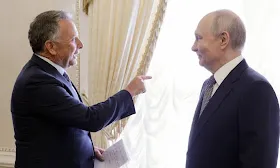
Media Lens: Witkoff urges Putin to resume peace talks as US detainee released
Witkoff asks Putin to resume direct peace talks.
The U.S. envoy recently visited Russia, leading to the release of American citizen Stephen Hubbard from prison after more than four years. This development is covered in both Axios and The New York Times.
What happened
Witkoff has requested that President Vladimir Putin resume direct peace talks, coinciding with Russia’s release of an American detainee, Stephen Hubbard, who had been imprisoned for over four years. This request follows a recent visit by a U.S. envoy, highlighting ongoing diplomatic efforts amid tensions between the two countries.
Stephen Hubbard’s release comes as part of a broader context of U.S.-Russia relations, with significant media coverage following his freedom. Various news outlets, including Axios and The New York Times, have reported on this development, marking a notable moment in international affairs.
Key facts
- Witkoff has requested President Putin to resume direct peace talks.
- Russia has released American Stephen Hubbard from prison, according to state media.
- Hubbard was released during a visit by a U.S. envoy.
- Trump praised the release of the U.S. teacher amid ongoing diplomatic discussions.
- The release of Hubbard follows over four years of imprisonment in Russia.
Where coverage differs
- Axios emphasizes the diplomatic aspect of Witkoff’s visit alongside the release of a detainee, while The New York Times focuses on the implications of the prisoner release itself.
- TribLIVE.com prioritizes the narrative of U.S. engagement with Russia and the timeline of events, while The Guardian foregrounds the reactions and political context surrounding the release.
- Axios highlights the involvement of U.S. officials in the negotiations, whereas TribLIVE.com emphasizes the personal story of the detainee’s release.
One story, four angles
Axios – Witkoff asks Putin to resume direct peace talks, Russia releases U.S. detainee
Publication: Axios | Primary framing pattern: political | Tone: neutral | Intensity: 5/10 | Sentiment: positive | Legal precision: low
Expand
Espresso Shot: Axios emphasizes the diplomatic action of Witkoff advocating for peace talks with Putin in the context of releasing a U.S. detainee. The article focuses on the implications of this release amidst U.S.-Russia relations, framing it as a potential opening for dialogue.
Publication emphasis: Axios highlights the geopolitical significance of the detainee’s release and peace efforts between the U.S. and Russia.
Framing analysis: The foregrounded elements include diplomatic dialogue and the release of a detainee, while secondary aspects involve broader geopolitical implications.
Bias: Selection: Reports on peace talks and diplomatic gestures Language: Generally straightforward, avoids sensationalism Omission: Potential complexities of U.S.-Russia tensions are not deeply explored.
Assessment: This piece positions the detainee’s release as a diplomatic tool, suggesting possible thawing relations between the U.S. and Russia.
The New York Times – Russia Releases American Stephen Hubbard From Prison, State Media Reports
Publication: The New York Times | Primary framing pattern: legal | Tone: analytical | Intensity: 6/10 | Sentiment: neutral | Legal precision: high
Expand
Espresso Shot: The New York Times details the legal and procedural context surrounding the release of Stephen Hubbard, emphasizing the role of international relations and the complexities of diplomatic negotiations during his release.
Publication emphasis: The Times emphasizes the legal aspects and geopolitical context of the detainee’s release.
Framing analysis: Legal procedures and the implications of Hubbard’s release take center stage, with the secondary focus on potential diplomatic repercussions.
Bias: Selection: Focus on legal and procedural accuracy Language: Formal and precise Omission: Potential emotional narratives from Hubbard’s perspective are not highlighted.
Assessment: The report gives a comprehensive view of the legal dynamics involved in international prisoner exchanges but maintains a neutral reporting stance.
TribLIVE.com – Russia frees American Stephen Hubbard after over 4 years in prison, during a visit by U.S. envoy
Publication: TribLIVE.com | Primary framing pattern: consequence | Tone: proactive | Intensity: 7/10 | Sentiment: positive | Legal precision: moderate
Expand
Espresso Shot: TribLIVE emphasizes the consequences of Hubbard’s release, tying it to U.S. diplomatic efforts and the implications for future negotiations. The focus is on how this event can influence U.S.-Russia relations positively.
Publication emphasis: The outlet highlights the potential long-term impact of the release on diplomatic relations between the U.S. and Russia.
Framing analysis: The immediate consequence of the release is foregrounded, with cooperative diplomatic efforts presented as a crucial secondary theme.
Bias: Selection: Focus on positive diplomatic outcomes Language: Forward-looking and optimistic Omission: No analysis of potential backlash or negative implications for U.S. policy.
Assessment: The article highlights a hopeful perspective on U.S.-Russia relations, suggesting that Hubbard’s release may signify a breakthrough in diplomatic engagement.
The Guardian – Trump hails Russia’s release of US teacher amid Witkoff’s visit – live
Publication: The Guardian | Primary framing pattern: political | Tone: celebratory | Intensity: 8/10 | Sentiment: positive | Legal precision: moderate
Expand
Espresso Shot: The Guardian highlights Trump’s positive response to the release of Hubbard, emphasizing its significance during a U.S. envoy’s diplomatic visit. The piece presents the event as a triumph for U.S. diplomacy.
Publication emphasis: The tone is celebratory, focusing on the diplomatic success represented by the detainee’s release.
Framing analysis: The narrative foregrounds Trump’s approval and the diplomatic implications, while secondary elements discuss broader implications for U.S. foreign policy.
Bias: Selection: Highlights Trump’s perspective enthusiastically Language: Celebratory and optimistic Omission: The complexities of political dialogue are underexplored.
Assessment: The report strongly promotes the positive outcomes of U.S.-Russia diplomatic actions while highlighting Trump’s endorsement as a significant factor.
Food for thought
Axios delivers the strongest legal framing by highlighting Witkoff’s call for direct peace talks with Putin alongside the release of American detainee Stephen Hubbard, situating the actions within diplomatic resolutions. In contrast, The New York Times adopts the most escalatory framing by emphasizing the release of Hubbard amid increasing tensions, suggesting a broader narrative of U.S.-Russia relations fraught with mistrust and urgency. The Guardian’s coverage mentions Trump’s praise of the release, reflecting a political rather than diplomatic focus, while TribLIVE.com concentrates on the timing of the release during a U.S. envoy visit, signaling strategic maneuvering. The facts do not change. What changes is where scrutiny lands.