



Europe warns Russia of painful response to hybrid attacks, says Kubilius
Europe has experienced a rise in hybrid attacks attributed to Moscow, including a recent arson attack on a drone manufacturer in Estonia.
Europe’s response to the recent increase in hybrid attacks illustrates a strategic shift towards a proactive defence posture, emphasising the necessity for coherent and painful countermeasures against Russian aggression.
“If we are hit by Russian hybrid attacks, our answers should be as painful as that attack,” said European Commissioner for Defence, Andrius Kubilius.
Kubilius: Europe’s response to Russian hybrid attacks should be ‘as painful’ for Moscow
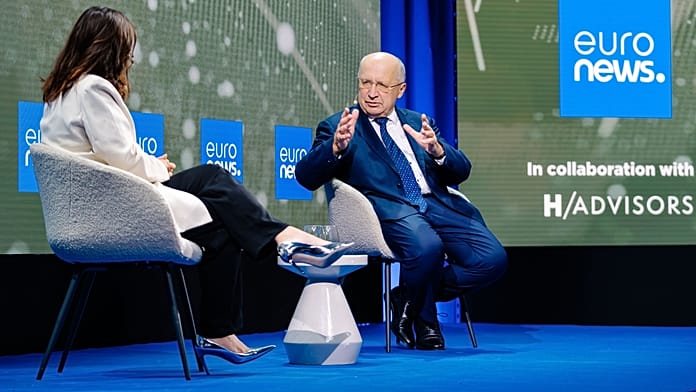
Russia should feel the pain of Europe’s response to hybrid attacks, the European Commissioner for Defence, Andrius Kubilius, has told EU News, warning that President Vladimir Putin is seeking to occupy “the hearts and the minds” of Europe’s population.
“If we are hit by Russian hybrid attacks, our answers should be as painful as that attack,” Kubilius told EU Editor Maria Tadeo during an inteview at EU News’ Defence and Space summit.
“How can that pain be created? It’s up to us,” he added.
Europe has seen a recent uptick in hybrid attacks attributed to Moscow, with Estonia accusing the Kremlin of orchestrating an arson attack on a drone maker supplying Ukraine earlier this week.
Earlier this month, Germany attributed an attempted drone attack on Ukrainian cargo planes at Leipzig/Halle Airport to Moscow.
Kubilius warned that Russia is seeking to sow fear by “occupying the hearts and the minds of people”, and called on Europe to sharpen its response.
“If we are facing hybrid war against us, we need to have hybrid defence.”
The Commissioner, who previously served as the Prime Minister of Lithuania, also rejected those who call for diplomatic engagements with the Kremlin in order to bring the war in Ukraine to an end.
Earlier on Wednesday, Bulgarian Prime Minister Rumen Radev told the EU News summit that the EU should engage diplomatically with Russia to avert a devastating nuclear attack
“There is a limit to just delivering weapons and supporting, because the final peace set-up will be done by diplomacy, not by delivering weapons. So our call is to listen more to each other, to open the lines of communication,” Radev said on Tuesday.
“The problem is that no one is raising the question about nuclear risk. Does it exist? Maybe not, I don’t know, but this is a risk,” he went on.
Commissioner Kubilius said efforts at diplomacy have not yielded outcomes and risk undermining Ukraine.
“Russians are standing with their position very clear: Ukraine needs to surrender – that is their diplomacy position,” he said.
“(President Vladimir) Putin needs to understand that in the end he won’t achieve anything with this war,” he added, “and Putin needs to feel that war is coming to Russia itself.”
He also warned that opening a diplomatic track with Russia could embolden Putin to escalate and put European security at further risk.
“So in my view, that doesn’t lead to anywhere which could make both Ukraine and the whole of Europe safe,” he explained. “And that would be a victory for Putin, and we can expect what would come next.”