



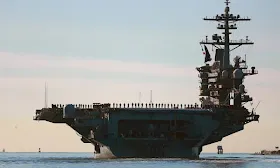
Media Lens: Top US commander visits USS Lincoln amid sailors’ morale concerns
USS Lincoln sailors express concerns to leadership.
USS Lincoln sailors have raised concerns regarding their morale and conditions. The situation has drawn attention to the views of Trump, according to coverage in US and global politics, and latest US news.
What happened
Sailors aboard the USS Lincoln have expressed concerns regarding their treatment and conditions, leading to claims that they feel undervalued. These issues have prompted discussions about the implications of military leadership and personnel morale.
In related news, U.S. Commander visits the aircraft carrier amid increasing anxiety regarding troop welfare, emphasizing the need for attention to service members’ concerns. Such visits are seen as a crucial step in addressing morale issues within the fleet.
Key facts
- The USS Abraham Lincoln is currently located in the Middle East.
- Concerns about morale among the crew of the USS Lincoln have been raised.
- Top US military commanders have visited the USS Lincoln recently.
- There is ongoing discussion regarding the treatment of servicemembers.
Where coverage differs
- Outlet A emphasizes the concerns of USS Lincoln sailors, while Outlet B highlights the visit of a US commander to the aircraft carrier.
- Outlet C foregrounds criticisms regarding Trump’s views on servicemembers, rather than addressing the morale issues in the military.
- Outlet D prioritizes updates on military visits in the Middle East over the impact of those visits on personnel morale.
One story, four angles
AP News – USS Lincoln sailors’ concerns
Publication: AP News | Primary framing pattern: consequence | Tone: serious | Intensity: 7/10 | Sentiment: neutral | Legal precision: moderate
Expand
Espresso Shot: The article underscores sailors’ worries regarding their well-being and morale amid operational demands, hinting at potential impacts on military readiness. Concerns raised reflect broader implications for service members’ mental health.
Publication emphasis: Sailors’ morale and health are highlighted as critical issues.
Framing analysis: The focus is on the consequences of neglecting servicemembers’ needs, with operational pressures as secondary factors.
Bias: Selection: Focus on sailors’ concerns rather than operational successes. Language: Use of terms like “pressure” underscores urgency. Omission: Lack of exploration of command responses.
Assessment: The article effectively raises important issues about the military’s treatment of its personnel.
WSJ – Iran War Commander Visits the USS Abraham Lincoln
Publication: WSJ | Primary framing pattern: political | Tone: assertive | Intensity: 8/10 | Sentiment: negative | Legal precision: high
Expand
Espresso Shot: This report emphasizes the political implications of military leadership visits, reflecting tensions between the U.S. and Iran, and the perception of military force as a tool of diplomacy.
Publication emphasis: The political contexts influencing military action are highlighted.
Framing analysis: Focus is on the political ramifications of military maneuvers, while operational details serve as secondary insights.
Bias: Selection: Lacks coverage of sailors’ experiences. Language: Use of “tensions” portrays a confrontational scenario. Omission: Absence of viewpoints from lower ranks.
Assessment: The piece powerfully links military actions to broader political dynamics, although it overlooks on-ground perspectives.
The Hill – Gallego: USS Lincoln concerns prove Trump views servicemembers as ‘toys’
Publication: The Hill | Primary framing pattern: moral | Tone: critical | Intensity: 7/10 | Sentiment: negative | Legal precision: low
Expand
Espresso Shot: The article articulates criticisms aimed at perceived disregard for servicemembers’ welfare, framing military personnel as undervalued by leadership amidst operational demands.
Publication emphasis: Highlights moral obligations of military leadership toward enlisted personnel.
Framing analysis: The focus is on ethical considerations regarding servicemembers’ welfare, while operational demands are secondary discussions.
Bias: Selection: Explicit criticism of leadership without alternative viewpoints. Language: Phrases like “servicemembers as ‘toys’” adds emotional weight. Omission: Lacks deeper policy discussions.
Assessment: This article effectively leverages emotional rhetoric to spotlight serious issues regarding military treatment but may alienate some readers.
CNN – Live updates: US commander visits aircraft carrier in Middle East for second time amid concerns about morale
Publication: CNN | Primary framing pattern: consequence | Tone: informative | Intensity: 6/10 | Sentiment: neutral | Legal precision: moderate
Expand
Espresso Shot: This ongoing coverage provides updates on the commander’s visit amid concerns over morale, suggesting potential implications for crew effectiveness.
Publication emphasis: Focus on the operational status and morale of the ship’s crew.
Framing analysis: The highlighted concerns about morale lead to implications about duty performance, with detailed reports as secondary.
Bias: Selection: Prioritizes operational updates over personal accounts. Language: Neutral terms used help maintain objectivity. Omission: Minimal personal perspectives presented.
Assessment: The article serves as a useful update while adequately addressing morale issues, though it lacks a human touch.
Food for thought
AP News employs the strongest legal framing by emphasizing potential violations of service members’ rights amid concerns over morale on the USS Abraham Lincoln. In contrast, The Hill takes a more escalatory approach, framing the situation as indicative of deeper issues within the Trump administration’s treatment of military personnel, suggesting they are viewed merely as “toys.” While AP News focuses on specific legal implications, The Hill amplifies the urgency of the narrative, marking a shift in public perception of military leadership. Both outlets highlight serious issues but differ fundamentally in tone and framing strategies. The facts do not change. What changes is where scrutiny lands.