



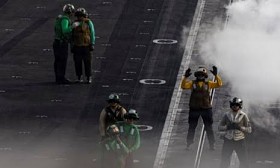
Media Lens: US Navy veterans raise concerns over USS Abraham Lincoln sailors’ health
USS Lincoln sailors express concerns.
US navy veterans and military health experts have expressed concerns over the health issues faced by sailors aboard the USS Abraham Lincoln. This concern is detailed in coverage in the US and global politics, as reported in latest US news.
What happened
Concerns have been raised by US Navy veterans and military health experts regarding the sailors aboard the USS Lincoln. These concerns relate to the sailors’ health and overall well-being amid ongoing issues within the ship’s environment.
Additionally, reports suggest a connection between the USS Lincoln’s problems and attacks on a U.S. base early in the war, highlighting the complexities faced by military personnel during extended deployments. This situation underscores the toll that prolonged operational strain can have on sailors.
Key facts
- The USS Abraham Lincoln is facing issues that have raised concerns among sailors.
- The concerns are being addressed by US navy veterans and military health experts.
- Reports indicate that the USS Lincoln’s issues may be linked to past military engagements.
- Recent articles discuss the impact of extended naval deployments on personnel well-being.
Where coverage differs
- The Guardian emphasizes the concerns of sailors and veterans regarding the health issues on the USS Lincoln, while The New York Times focuses on the relationship between the USS Lincoln’s problems and prior military actions.
- WSJ prioritizes the strategic implications of extended carrier deployments, whereas AP News highlights the U.S. withdrawal of aircraft carriers in relation to broader foreign policy issues.
- Outlet A foregrounds personnel health concerns, while Outlet B foregrounds military strategy and historical context.
- Outlet C emphasizes sailors’ experiences more than the structural issues of military policy, while Outlet D gives more weight to geopolitical ramifications.
One story, four angles
The Guardian – US navy veterans and military health experts express concern over USS Abraham Lincoln sailors
Publication: The Guardian | Primary framing pattern: consequence | Tone: critical | Intensity: 7/10 | Sentiment: negative | Legal precision: moderate
Expand
Espresso Shot: The article emphasizes serious concerns voiced by navy veterans and health experts regarding the welfare of USS Abraham Lincoln sailors, focusing on the consequences of their living and working conditions.
Publication emphasis: The emphasis lies on the negative implications for the mental and physical health of sailors aboard the USS Abraham Lincoln.
Framing analysis: The primary focus is on the potential health consequences for sailors, while secondary issues include operational facets like deployment duration and mental wellness services.
Bias: Selection: Highlights veterans’ concerns; Language: Uses words like “express concern” to frame criticism; Omission: Less attention on systemic issues affecting all navy personnel.
Assessment: The framing effectively portrays the dire implications of inadequate conditions on sailors’ well-being.
The New York Times – Navy and USS Lincoln’s Problems Are Tied to Attacks on U.S. Base Early in War
Publication: The New York Times | Primary framing pattern: policy | Tone: analytical | Intensity: 6/10 | Sentiment: measured | Legal precision: high
Expand
Espresso Shot: This article investigates how previous military actions correlate with the ongoing problems faced by the USS Lincoln, underscoring the need for reevaluation of military policy related to carrier operations.
Publication emphasis: Emphasis is placed on linking operational challenges of the USS Lincoln to earlier strategic failures in military engagements.
Framing analysis: Foregrounding the policy implications of military actions, while secondary aspects involve sailor health and operational tactics.
Bias: Selection: Prioritizes historical context in analyzing naval issues; Language: Analytical terms imply a need for reform; Omission: Less focus on personal impacts on individual sailors.
Assessment: The framing serves to connect historical conflict consequences with current policy failures, providing a meaningful critique.
WSJ – 3 Reasons Extended Carrier Deployments Take Such a Heavy Toll at Sea
Publication: WSJ | Primary framing pattern: consequence | Tone: concerned | Intensity: 6/10 | Sentiment: warning | Legal precision: moderate
Expand
Espresso Shot: This article outlines the adverse effects of prolonged carrier deployments on sailors, emphasizing the mental and physical burdens that arise from such extended service periods.
Publication emphasis: Focus is on how long deployments impact sailors’ well-being and operational effectiveness.
Framing analysis: The direct consequences of these conditions for sailors are foregrounded, with less emphasis on potential policy or systemic issues.
Bias: Selection: Highlights personal experiences and testimonies; Language: Urgent terms create a sense of risk; Omission: Broader institutional factors that might mitigate issues are overlooked.
Assessment: The focus on individual sailor experiences captures the human cost of extended deployments effectively.
AP News – US pulls last aircraft carrier in Asia as Trump focuses on Iran and the Western Hemisphere
Publication: AP News | Primary framing pattern: political | Tone: factual | Intensity: 5/10 | Sentiment: neutral | Legal precision: high
Expand
Espresso Shot: This report informs readers about the geopolitical context surrounding the withdrawal of the last US aircraft carrier from the Asia Pacific, linking this decision to broader political maneuvers by the Trump administration.
Publication emphasis: Emphasis on political motives and implications of military repositioning in the region.
Framing analysis: Highlights political strategy while downplaying individual sailor impacts or operational logistics.
Bias: Selection: Focuses on political implications rather than personal stories; Language: Neutral terms reflect a fact-based approach; Omission: Less attention to the direct effects on troops or regional stability.
Assessment: The political framing illustrates a broader governmental strategy without considering individual service members’ realities.
Food for thought
The Guardian emphasizes the legal ramifications surrounding the USS Lincoln sailors’ complaints, framing military negligence as a breach of duty to veterans, while presenting strong legal framing. In contrast, The New York Times escalates the discourse by linking the sailors’ issues to broader vulnerabilities within military operations, implying systemic failures and imminent risks. AP News, on the other hand, provides a softer angle, focusing on political shifts rather than the crisis at hand. The WSJ discusses operational challenges without fully engaging in the implications of neglect, leaving a more muted impact. The facts do not change. What changes is where scrutiny lands.