



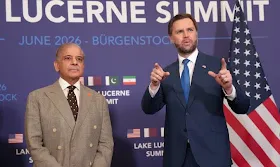
Media Lens: US and Iranian officials engage in peace talks in Switzerland
US and Iranian officials convene in Switzerland to initiate peace talks. These discussions focus on Tehran’s nuclear programme amid rising international scrutiny.
Quick links: What has happened | Status quo | Confirmed facts | Preconceptions | Elisions | One story, four angles | Related links
What has happened
U.S. officials, including Vice President JD Vance, are engaged in negotiations with Iranian representatives in Switzerland, focusing on Tehran’s nuclear program. This meeting aims to stabilize a recently established peace deal while addressing ongoing tensions between the two countries.
The talks are taking place amidst a backdrop of mixed reactions from both nations, with Vance advocating for a firm stance on Iran’s nuclear activities. The outcome of these discussions could significantly influence future diplomatic relations and regional security.
Status quo
On June 21, 2026, U.S. and Iranian officials convened in Switzerland for peace talks aimed at progressing discussions surrounding Iran’s nuclear program. Vice President JD Vance represented the U.S. delegation in these negotiations, which follow a recent peace agreement between the countries. The meeting is seen as a critical opportunity to address ongoing tensions and facilitate dialogue regarding regional security issues.
Confirmed facts
- US and Iranian officials are meeting in Switzerland for peace talks.
- The talks concern Iran’s nuclear program.
- Vice President JD Vance is attending the discussions.
- This meeting comes amid growing tensions related to Iran’s nuclear activities.
Preconceptions
- The Associated Press prioritizes diplomatic meetings and efforts for peace, emphasizing the arrival of U.S. and Iranian officials in Switzerland for talks, whereas CNN highlights Trump’s threats toward the Iranian delegation, suggesting a focus on conflict and tensions.
- PBS underscores the significance of U.S. negotiations with Iranian officials aimed at restoring dialogue, while NBC News emphasizes the precarious nature of the peace efforts, insinuating a sense of urgency or risk surrounding the negotiations.
- AP News places a spotlight on the diplomatic aspect of these negotiations, contrasting with CNN’s emphasis on the potential disruptions posed by political adversarial actions, reflecting different editorial priorities in reporting U.S.-Iran relations.
Elisions
- AP News focuses primarily on the diplomatic aspects of the U.S.-Iran peace talks but lacks detail on the potential implications for regional security, which is covered more extensively by NBC News.
- CNN highlights recent threats made by Trump during the talks, providing a different angle that is not mentioned by PBS, which places more emphasis on the negotiations themselves.
- PBS includes insights on past negotiations and historical context that are missing from both AP News and NBC News, offering a richer background but lacking current reaction from stakeholders involved in the talks.
- While all sources cover the meeting’s logistics and participants, they diverge on key narratives, with AP emphasizing diplomatic progress, CNN detailing political tensions, and NBC warning of risks to the peace deal.
One story, four angles
CNN – Live updates: Trump threatens Iranian delegation while Vance holds talks with them
Publication: CNN | Intensity: (7/10) | Sentiment: Neutral | Legal precision: Moderate
Expand
Espresso Shot: The title emphasizes Trump’s threats, suggesting an aggressive U.S. stance overshadowing diplomatic efforts.
Key differences:
1. CNN highlights Trump’s antagonistic remarks over diplomatic talks, e.g., “Trump threatens Iranian delegation,” setting a confrontational tone.
2. Focus shifts to Trump’s influence in the narrative, contrasting with other outlets that emphasize collaborative strategies.
3. Placement of “Live updates” suggests continuous conflict reporting rather than resolution progress.
Bias: Selection: Emphasizes Trump’s threats over diplomatic efforts | Language: Uses “threatens,” portraying a combative approach | Omission: Lacks detailed context on negotiation objectives.
Assessment: Readers perceive heightened tensions overshadowing the peace talks.
NBC News – Vice President JD Vance in Switzerland for Iran talks with days-old peace deal at risk
Publication: NBC News | Intensity: (6/10) | Sentiment: Cautious | Legal precision: High
Expand
Espresso Shot: The focus on Vance’s presence indicates the seriousness of the talks, emphasizing the imminent risk of collapse.
Key differences:
1. NBC frames the narrative around the peace deal’s vulnerability with “days-old peace deal at risk,” emphasizing urgency.
2. Highlights Vance’s role, suggesting brokered negotiations rather than discourse, unlike other outlets.
3. Uses factual terms which underplay assertive rhetoric, appealing to rational analysis rather than sensationalism.
Bias: Selection: Focuses on the peace deal’s fragility over the talks’ positive aspects | Language: “risk” implies danger without direct confrontation | Omission: Lacks exploration of diplomatic achievements or alternatives.
Assessment: Readers perceive a cautious approach toward a potentially destabilizing situation.
AP News – US and Iranian officials meet in Switzerland for peace talks
Publication: AP News | Intensity: (5/10) | Sentiment: Neutral | Legal precision: High
Expand
Espresso Shot: Emphasizes the diplomatic meeting, highlighting collaboration over conflict, prompting readers to consider potential resolutions.
Key differences:
1. AP highlights the meeting’s diplomatic nature with “meet in Switzerland for peace talks,” suggesting a collaborative framework.
2. Utilizes neutral language focusing on officials instead of political figures, promoting an unbiased tone.
3. Placement of the meeting context downplays sensational aspects, inviting a more reserved reading.
Bias: Selection: Prioritizes the meeting context over contentious issues | Language: Neutral language promotes peace efforts | Omission: Does not delve into the challenges faced during the dialogue.
Assessment: Readers are led to interpret the meeting as a constructive diplomatic engagement.
PBS – Vance meets top Iranian officials as U.S. looks to get negotiations back on track
Publication: PBS | Intensity: (6/10) | Sentiment: Neutral | Legal precision: High
Expand
Espresso Shot: Focus is on the revitalization of negotiations, indicating a forward-thinking perspective toward resolving issues.
Key differences:
1. PBS emphasizes the forward movement with “get negotiations back on track,” indicating a strategic approach.
2. Mentions “top Iranian officials,” elevating the importance of the talks beyond mere formality.
3. Retains a neutral stance, using terms that convey progress rather than setbacks.
Bias: Selection: Favors angles that present negotiation efforts positively | Language: “back on track” implies recovery and persistence | Omission: Less focus on potential failures or setbacks in negotiations.
Assessment: Readers view the talks as an important step toward constructive progress.
In comparing the coverage of U.S.-Iran negotiations, AP News presents a balanced view, framing the events as essential peace talks. In contrast, CNN adopts a more escalatory tone by emphasizing threats from Trump towards the Iranian delegation. PBS leans towards a reconciliatory approach, highlighting negotiations aiming to stabilize relations, while NBC News underscores a sense of urgency and potential crisis surrounding the talks. Overall, AP offers the strongest framing, focusing on constructive dialogue, while CNN presents the most escalatory depiction by stressing threats. The facts do not change. What changes is where scrutiny lands.
Related links
AP News
Vance and Iranian officials arrive in Switzerland to launch talks on Tehran’s nuclear program
CNN
Live updates: Trump threatens Iranian delegation while Vance holds talks with them
PBS
Vance meets top Iranian officials as U.S. looks to get negotiations back on track
NBC News
Vice President JD Vance in Switzerland for Iran talks with days-old peace deal at risk