



Get you up to speed: Ebola outbreak: What travel restrictions have countries imposed?
Countries including Canada, the Bahamas, and the US are implementing travel bans to prevent the spread of the Bundibugyo strain of Ebola, which has resulted in confirmed infections in Uganda and the Democratic Republic of the Congo (DRC). In Uganda, five cases and one death have been confirmed amid the ongoing outbreak, while the DRC has reported 10 confirmed deaths and 220 suspected deaths since mid-May.
The World Health Organization (WHO) has recorded a total of 10 confirmed deaths and 220 suspected deaths from the Bundibugyo strain of Ebola since mid-May. The Congolese Ministry of Transport and Communications has suspended all flights to and from Bunia, while Uganda has enacted a four-week halt on bus and boat border crossings.
The World Health Organization (WHO) has raised its risk assessment for the Democratic Republic of the Congo to very high, while maintaining a low risk at the global level. In response to the outbreak, Canada, the Bahamas, and the US are implementing travel bans on residents from the affected countries, with the US also deploying public health officers to Kenya to establish a quarantine facility for exposed individuals.
What remains unclear — It is uncertain how effective the current travel bans and restrictions will be in preventing the further spread of the Bundibugyo strain of Ebola.
Countries impose travel restrictions in response to Ebola outbreak in DRC and Uganda
EXPLAINERNews|HealthEbola outbreak: What travel restrictions have countries imposed?
Canada, the Bahamas and the US are banning arrivals from affected countries to prevent the spread of the rare Bundibugyo strain.
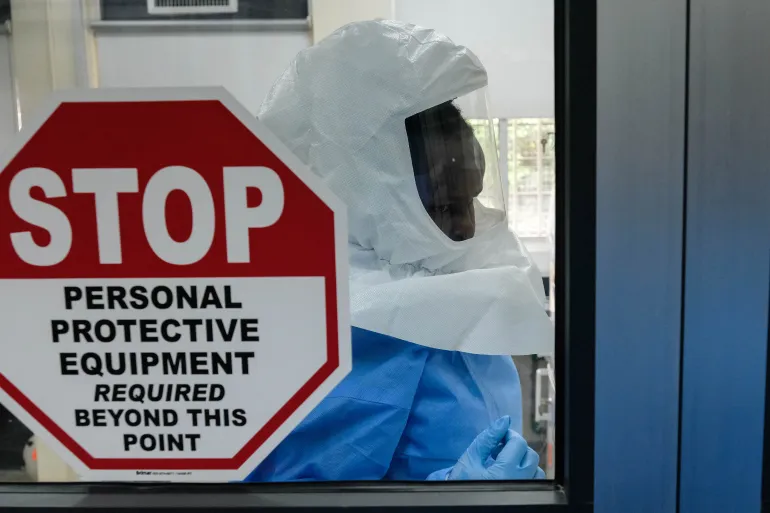 Uganda is carrying out research and laboratory testing of Ebola samples in an attempt to contain the outbreak, which has spilled over from the epicentre in neighbouring DRC [File: Hajarah Nalwadda/Getty Images]
The latest outbreak of a rare strain of the Ebola virus in the Democratic Republic of the Congo (DRC) and Uganda has prompted several governments to take action in a bid to stop the spread of the disease.
The World Health Organization (WHO) has recorded 10 confirmed deaths and 220 suspected deaths from the lethal Bundibugyo (BVD) strain of Ebola in DRC since mid-May. A further 900 suspected cases have been recorded since Kinshasa declared the outbreak on May 15. In Uganda, five cases and one death have been confirmed.
list of 3 itemslist 1 of 3Attacks on Ebola centres intensify in eastern DRC amid outbreak fearslist 2 of 3Ebola spreads in the DRC as authorities struggle to contain outbreaklist 3 of 3How did a rare strain of Ebola outrun doctors?end of list
The United Nations’ health agency raised its risk assessment from high to very high at the national level for DRC last week, but continues to assess the risk as low at the global level.
Nevertheless, several countries have announced travel bans and temporary border measures to contain the spread of the new strain.
Which countries are implementing restrictions to contain the virus?
This week, the Congolese Ministry of Transport and Communications suspended all flights to and from Bunia in eastern DRC in an attempt to contain the Ebola outbreak. The Bunia health zone is one of 11 Congolese health zones affected by the Ebola outbreak. Some exceptions, such as humanitarian, medical and emergency flights, may be allowed with special approval from aviation and health authorities.
Uganda has also introduced restrictions on travel to and from the DRC. All direct flights have been suspended while bus and boat border crossings have been halted for four weeks. Weekly markets in border districts have been put on hold. Freight traffic, essential goods and food supplies, however, are still permitted to cross.
Beyond the immediate affected region, Canada and the Bahamas said they would temporarily ban residents of the DRC, Uganda and South Sudan from entering.
Residents from those countries will be unable to travel to Canada for 90 days from Wednesday, the government said. Canadian citizens, permanent residents and other foreign nationals who have been in affected areas in recent weeks must quarantine for 21 days from May 30, even if they do not show symptoms, Canada’s public health agency said.
The Bahamian government said entry restrictions would take immediate effect and remain in place for a period of 30 days, subject to review by the Caribbean country’s health ministry.
Last week, the US banned all non-citizens who had travelled to the DRC, Uganda or South Sudan in the previous 21 days from entering the country. On Friday, the Centers for Disease Control and Prevention (CDC) extended the ban to green card holders who have been in those countries in the previous 21 days.
US citizens who have travelled to affected countries have been told to return to the US via selected airports equipped with enhanced screening. These are Washington Dulles International Airport (IAD) for flights to the US departing after May 21, 2026; Hartsfield-Jackson Atlanta International Airport (ATL) for flights after May 22; and George Bush Intercontinental Airport, (IAH), Houston, for flights departing after May 26.
The Wall Street Journal has reported that the Trump administration is expected to deploy US public health officers to Kenya to staff a potential quarantine facility, intended for Americans who have been exposed to or are at high risk of testing positive for the virus in the region, as well as for those who have already tested positive.
No Ebola cases have been recorded in Canada, the Bahamas or the US.
Will these measures stop the spread of the virus?
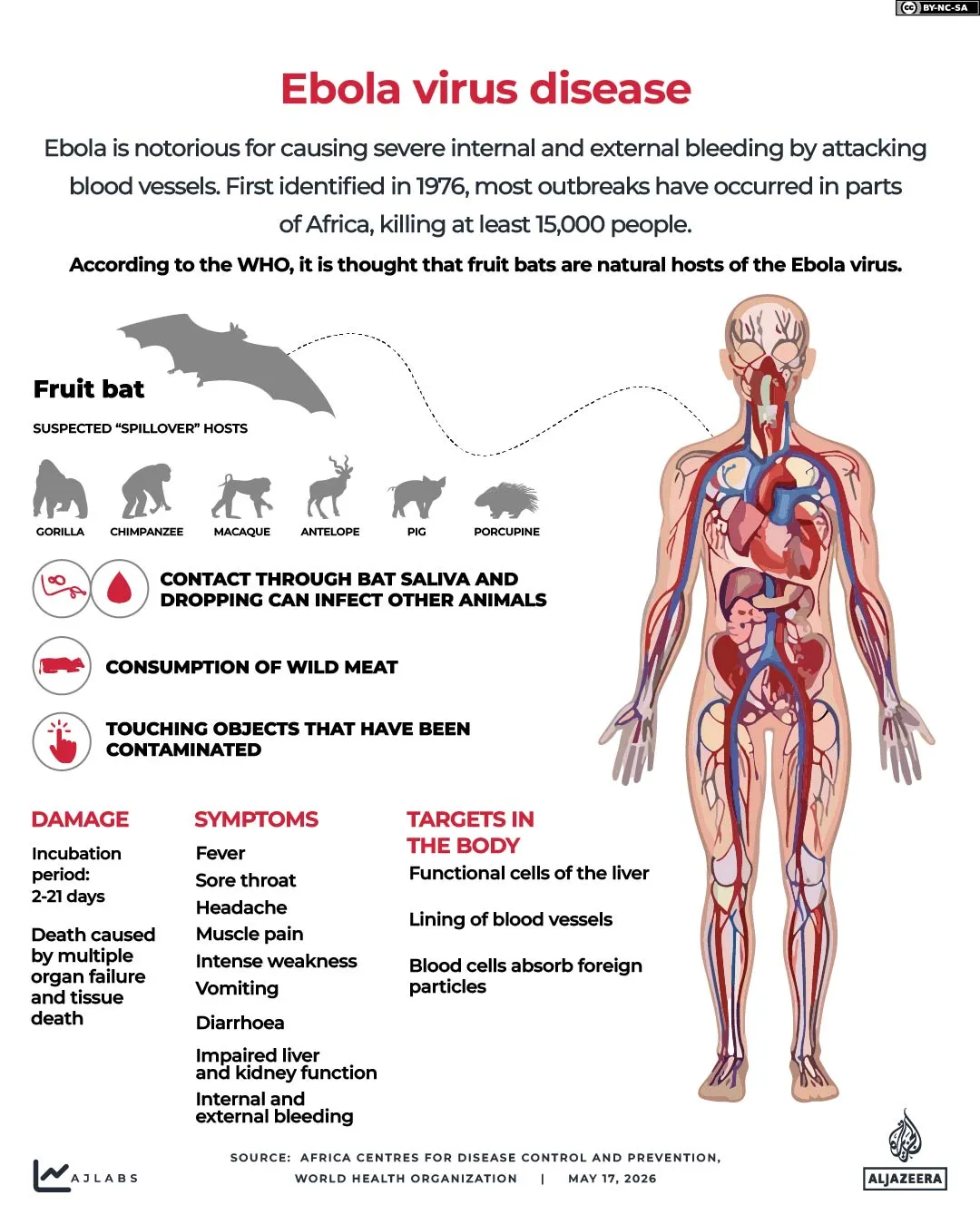
The Bundibugyo strain is a rare, highly fatal species of the Ebola virus, which causes severe viral haemorrhagic fever. It spreads through close physical contact with the blood or bodily fluids of an infected or deceased person, as well as via contaminated objects. Therefore, all measures limiting contact provide an effective way of containing infections.
At the national level in the DRC and Uganda, WHO Director-General Tedros Adhanom Ghebreyesus this week said the response included contact tracing, establishing treatment centres, and infection prevention and control.
However, “the delay in detecting the outbreak means that we are now playing catch-up with a very fast-moving epidemic”. “We are urgently scaling up operations, but at the moment, the epidemic is outpacing us,” he said.
“But we know this virus, and we know how to stop it,” Tedros added. “We have stopped every previous Ebola outbreak, and we will stop this one, too.”
Is air travel safe?
The United Nations has called on airlines and governments to stick strictly to protocols established by the International Civil Aviation Organization (ICAO) during the COVID-19 global pandemic. These include using electronic health declarations and contactless border processes, it said on Tuesday.
The ICAO said that, for now, international flights are safe. It urged countries not to close borders or impose restrictions on travel or trade and to focus on exit screening for departing passengers, rather than entry screening for arrivals.
“Exit screening can be implemented in affected countries for all persons at international airports for unexplained illness associated with fever and consistent with other symptoms of potential BVD,” the ICAO said in a statement.