



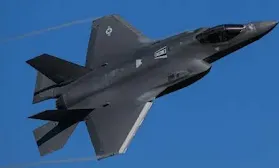
Media Lens: US conducts strikes on Iran targeting missile sites and boats
The US military has launched new strikes on Iran, targeting missile sites and boats. These actions occurred amid ongoing tensions in the region.
Quick links: What has happened | Status quo | Confirmed facts | Preconceptions | Elisions | One story, four angles | Related links
What has happened
The United States military recently conducted airstrikes on Iranian missile sites and boats in the Red Sea, according to reports. These military actions, described as “defensive” by officials from the U.S. Central Command (CENTCOM), were carried out to protect maritime security amid heightened tensions in the region.
The strikes follow a series of provocations involving Iranian forces, with U.S. officials asserting that they aim to deter further aggression. CENTCOM has stated that a ceasefire remains in place despite these operations, emphasizing the necessity of such measures in the current geopolitical climate.
Status quo
The recent escalation between the United States and Iran has resulted in multiple military strikes. U.S. forces launched precision attacks targeting Iranian missile sites and naval assets, which officials described as defensive actions in response to perceived threats. These developments have raised tensions in the region, with implications for ongoing negotiations surrounding Iran’s nuclear program and regional influence.
Confirmed facts
- The US military conducted new strikes targeting missile sites and boats operated by Iran.
- These strikes were characterized by US officials as “defensive” actions.
- The strikes are reported to be part of ongoing military operations related to Iran.
- The US insists that a ceasefire is still in place between the involved parties despite the strikes.
Preconceptions
- **Prioritisation of Content**: BBC focuses on immediate military actions, specifically the targeting of missile sites and boats, while WSJ emphasizes the nature of the attacks, labeling them as “defensive”.
- **Emphasis on Statements**: CBS News highlights CENTCOM’s assertions about maintaining a ceasefire amid negotiations, whereas CNBC concentrates on the market implications stemming from these strikes, reflecting a more economic perspective.
- **Reduction of Context**: ABC tends to downplay the broader geopolitical context, while publications like WSJ and CBS incorporate political and military implications of the U.S. actions.
Elisions
- Coverage on U.S. strikes in Iran lacks specific casualty figures across different sources, with some reports focusing on military infrastructure while others emphasize political ramifications.
- Sources such as the BBC highlight the U.S. rationale for the strikes as “defensive,” whereas CNN emphasizes the potential escalation of conflict without discussing military justifications.
- While the Wall Street Journal provides extensive context on past U.S.-Iran relations, other outlets like CNBC and CBS tend to focus on immediate economic impacts, leaving out broader geopolitical analysis.
One story, four angles
BBC – US launches new strikes on Iran, targeting missile sites and boats
Publication: BBC | Intensity: (8/10) | Sentiment: Neutral | Legal precision: Moderate
Expand
Espresso Shot: The headline directs attention to specific military actions against Iran, emphasizing targeting and intent, preparing readers for a focus on military strategy.
Key differences:
- Placement: The term “strikes” appears first, creating urgency compared to other media that may emphasize context.
- Language: “targeting missile sites and boats” employs precise military jargon, indicating an operational focus versus more general descriptions elsewhere.
- Framing: By using “US launches,” it implies direct initiative, which contrasts with other publications portraying actions as responses or retaliations.
Bias: Selection: Focus solely on military actions without context on diplomatic efforts. | Language: Uses strong military terminology that may evoke aggression. | Omission: Does not address civilian impacts or consequences of strikes.
Assessment: The reader initially believes that the US is actively engaging in military offensives against Iran, suggesting a high level of conflict.
WSJ – Iran War Live Updates: U.S. Conducted ‘Defensive’ Attacks On Iranian Targets, Officials Say
Publication: WSJ | Intensity: (7/10) | Sentiment: Neutral | Legal precision: High
Expand
Espresso Shot: The headline leads with “defensive attacks,” prompting readers to consider justification rather than mere aggression, which shapes perception early.
Key differences:
- Word Choice: “Defensive” suggests justification for military action, whereas others may omit this framing.
- Contextualization: Emphasizes official verification, appealing to authority, contrasting with more speculative headlines in other outlets.
- Focus: Stability and safety implications are highlighted, in contrast to more explosive phrasing found elsewhere.
Bias: Selection: Prioritizes military responses without adequate context on motivations. | Language: Employs justification that may skew perception toward legitimacy. | Omission: Lacks insight into the broader consequences of military actions.
Assessment: The reader is primed to view US actions as justified defensive maneuvers, shaping a positive view of military engagement.
CNBC – CNBC Daily Open: Markets optimism tested by fresh Iran strikes
Publication: CNBC | Intensity: (6/10) | Sentiment: Cautious | Legal precision: Low
Expand
Espresso Shot: The headline emphasizes market reaction to military strikes, directing the reader’s attention to economic implications over the strikes themselves.
Key differences:
- Focus: Shifts from military actions to economic impacts, unlike others that center on the strikes’ nature.
- Language: The phrase “market optimism tested” implies a direct impact on economic sentiment, a softer approach than overtly militant language.
- Contextualization: This framing hints at interconnectedness between military actions and financial markets, which other publications don’t emphasize.
Bias: Selection: Centers on the economic aspect without exploring the humanitarian side of strikes. | Language: Uses diplomatic-sounding phrases to soften the impact of military actions. | Omission: Neglects any mention of the human toll of military engagement.
Assessment: Readers may conclude that military engagements are contexts in which economic stability is jeopardized, suggesting indirect consequences of warfare.
CBS News – Live Updates: U.S. conducts “self-defense” strikes, CENTCOM says, insists ceasefire still in place amid negotiations
Publication: CBS News | Intensity: (7/10) | Sentiment: Neutral | Legal precision: High
Expand
Espresso Shot: The headline highlights “self-defense,” prompting readers to consider the justification of military strikes during ongoing negotiations, influencing first impressions substantially.
Key differences:
- Language: Use of “self-defense” immediately sets a tone of justification for military actions unlike others which lack contextual framing.
- Framing: The mention of CENTCOM provides authoritative context, which might lend credibility versus more general attributions seen in different publications.
- Negotiation Context: By referring to ceasefire discussions, it implies a complex situation rather than a straightforward military conflict.
Bias: Selection: Emphasis predominantly on military and strategic elements without exploring humanitarian implications. | Language: Generally aims to portray actions as justified. | Omission: Does not delve into local civilian perspectives or impacts of ongoing conflict.
Assessment: The reader likely believes the actions are presented as necessary under current conditions, creating a strategic narrative around military engagement.
The WSJ’s coverage of U.S. military actions in Iran emphasizes a “defensive” narrative, fostering a sense of justification and restraint in response to perceived threats. Conversely, the BBC presents a more escalatory framing, highlighting direct military strikes without the same defensive context. CNBC and CBS also reflect this tension, with CBS suggesting ongoing negotiations despite military actions, while CNBC underscores market anxieties arising from these strikes. Ultimately, the WSJ’s framing is the most conciliatory, while the BBC’s narrative is the most provocative. The facts do not change. What changes is where scrutiny lands.
Related links
BBC
US launches new strikes on Iran, targeting missile sites and boats
WSJ
Iran War Live Updates: U.S. Conducted ‘Defensive’ Attacks On Iranian Targets, Officials Say
CNBC
CNBC Daily Open: Markets optimism tested by fresh Iran strikes