



Media Lens: Officials monitor Garden Grove chemical tank amid potential explosion threat
Officials monitor Garden Grove chemical tank for possible explosion.
Officials are monitoring a chemical tank in Garden Grove for a potential explosion. This situation is being closely followed due to safety concerns, according to coverage in latest US news and global security developments.
What happened
Officials are closely monitoring a chemical tank in Garden Grove for potential explosion hazards. Crews conducted an overnight mission to assess pressure levels in the tank as part of their emergency response efforts.
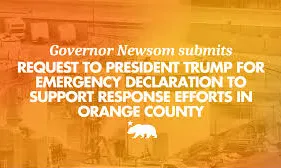
Governor Newsom has requested an emergency declaration from President Trump to support response activities in Orange County. The situation has raised significant concerns regarding the safety and environmental impact of a possible chemical incident.
Key facts
- Officials are currently monitoring a chemical tank in Garden Grove to prevent a possible explosion.
- Crews conducted an overnight mission to assess pressure in the tank.
- California Governor Gavin Newsom requested an emergency declaration from President Trump for support in the response efforts in Orange County.
- The situation surrounding the chemical tank remains critical, with officials emphasizing the importance of ongoing monitoring.
Where coverage differs
- Outlet A emphasizes the monitoring activities related to the chemical tank, while Outlet B emphasizes the urgency of preventing a chemical explosion.
- Outlet C foregrounds the emergency declaration request made by Governor Newsom rather than the ongoing assessment of the chemical tank.
- Outlet D prioritizes the implications of the potential explosion for public safety over the technical aspects of the chemical tank assessment.
One story, four angles
California State Portal | CA.gov – Officials monitor Garden Grove chemical tank for possible explosion
Publication: California State Portal | CA.gov | Primary framing pattern: consequence | Tone: urgent | Intensity: 8/10 | Sentiment: neutral | Legal precision: high
Expand
Espresso Shot: The report highlights heightened concerns surrounding a chemical tank in Garden Grove, emphasizing the imminent threat of a potential explosion necessitating urgent action from officials.
Publication emphasis: The focus is on public safety and immediate monitoring efforts to prevent disaster.
Framing analysis: The article foregrounds the possible consequences of the chemical tank’s instability while relegating detailed technical specifics to the background.
Bias: Selection: Direct focus on safety protocols Language: Use of urgent language to convey severity Omission: Lack of in-depth analysis on chemical risks
Assessment: The outlet effectively conveys the seriousness of the situation and the need for swift action to mitigate risks.
NBC Los Angeles – Recap: Crews conduct ‘all-night mission’ to gauge pressure in Garden Grove tank
Publication: NBC Los Angeles | Primary framing pattern: operational | Tone: informative | Intensity: 6/10 | Sentiment: neutral | Legal precision: medium
Expand
Espresso Shot: This report details the overnight efforts by crews to assess the pressure within the Garden Grove chemical tank, emphasizing the technical aspects of ongoing monitoring operations.
Publication emphasis: The focus is on the logistical and operational side of crisis management.
Framing analysis: Operational details are foregrounded, while the potential risks remain secondary, influencing public perception of both competence and urgency.
Bias: Selection: Focus on operational efforts without context on chemical implications Language: Technical yet accessible language used Omission: Less emphasis on potential health impacts
Assessment: The coverage effectively informs the public about actions taken but lacks robust discussion on safety implications.
Orange County Register – Correction: FEMA not offering hotel stays
Publication: Orange County Register | Primary framing pattern: corrective | Tone: factual | Intensity: 5/10 | Sentiment: neutral | Legal precision: high
Expand
Espresso Shot: This piece clarifies initial reports about FEMA’s response, explicitly stating that hotel accommodations are not available, thereby rectifying misinformation that could affect public expectations.
Publication emphasis: The focus is on correcting public misinformation regarding FEMA assistance.
Framing analysis: The correction is foregrounded, emphasizing the need for accurate information amidst a crisis, with lesser focus on operational details.
Bias: Selection: Solely addresses FEMA’s response Language: Clear and concise correction language utilized Omission: Limited context on overall crisis management efforts
Assessment: The outlet serves the community well by providing essential factual corrections, although it lacks broader context on assistance options.
Los Angeles Times – The next few hours will be critical in battle to prevent O.C. chemical explosion
Publication: Los Angeles Times | Primary framing pattern: crisis management | Tone: urgent | Intensity: 9/10 | Sentiment: negative | Legal precision: high
Expand
Espresso Shot: This article underscores the urgency of the situation surrounding the Garden Grove chemical tank, noting critical actions required to avert a potential disaster, thus emphasizing the stakes involved.
Publication emphasis: The article prioritizes the immediate dangers and necessary responsive measures in crisis management.
Framing analysis: The crisis nature of the situation is foregrounded, while administrative details take a secondary role, dramatically influencing public concern.
Bias: Selection: Focus on immediate crisis implications Language: Strong emotive language to convey urgency Omission: Less technical detail on response strategies
Assessment: The Los Angeles Times effectively communicates the urgency of the situation, enhancing public awareness and response alignment.
Food for thought
The Los Angeles Times adopts a serious tone, framing the situation as “critical,” highlighting the urgency of preventing a chemical explosion. Their focus on the immediate risk establishes the strongest legal framing, emphasizing governmental responsibilities to protect the public. In contrast, NBC Los Angeles takes a more subdued approach, describing the situation as an “all-night mission” to gauge pressure, which suggests a less dire scenario and therefore has the most escalatory framing. This difference illustrates how the gravity of the threat can be portrayed variously depending on the outlet’s narrative style. The facts do not change. What changes is where scrutiny lands.