



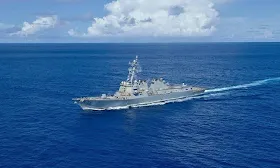
Media Lens: US military sinks Iranian boats amid ongoing Strait of Hormuz tensions
US military sinks 7 Iranian boats in Hormuz.
The U.S. military sank seven small Iranian boats following attacks on the UAE and ships in the Strait of Hormuz. This event has raised tensions in the region and has been covered in major news outlets, according to the latest US news and US and global politics.
What happened
US military operations in the Strait of Hormuz have escalated, with reports indicating the sinking of seven small Iranian boats. This follows Iranian attacks on ships and the UAE amidst rising tensions in the region.
Iran has accused the US military of killing five civilians in these recent attacks, highlighting the ongoing conflict and its humanitarian implications. The situation continues to unfold as international scrutiny increases.
Key facts
- The U.S. military sunk 7 small Iranian boats in the Strait of Hormuz.
- Iran has launched attacks on ships in the Strait of Hormuz.
- There are ongoing tensions between the U.S. and Iran over control of the Strait of Hormuz.
- Iran claimed that U.S. military actions resulted in the death of five civilians.
Where coverage differs
- CBS News emphasizes US military actions, while The Guardian focuses on Iranian responses to those actions.
- Al Jazeera foregrounds civilian casualties resulting from conflicts rather than military strategies.
- CNN prioritizes market reactions and implications of US policies over on-the-ground conditions.
One story, four angles
CBS News – Live Updates: U.S. sinks 7 small Iranian boats as Iran launches attacks on UAE and ships in Strait of Hormuz
Publication: CBS News | Primary framing pattern: policy | Tone: urgent | Intensity: 8/10 | Sentiment: neutral | Legal precision: high
Expand
Espresso Shot: The CBS News report emphasizes the U.S. military’s active role in neutralizing threats in the Strait of Hormuz by sinking boats, indicating a shift in the region’s dynamics due to Iran’s aggressive actions. The urgency of the situation necessitates immediate governmental policy responses, highlighting military interventions as a primary measure against evolving threats.
Publication emphasis: The article underscores U.S. military action as a response to Iranian hostilities.
Framing analysis: The foregrounding of U.S. military action and the responses to Iranian provocations contrast sharply with the secondary mention of geopolitical consequences for regional stability.
Bias: Selection: Focus on military actions Language: Emergency-oriented terminology Omission: Broader political implications or diplomatic efforts are minimally addressed.
Assessment: The report prioritizes military responses to Iranian aggression, framing it as a policy-centered issue while downplaying potential diplomatic avenues.
The Guardian – Middle East crisis live: US targets Iranian boats amid tense push for control of strait of Hormuz
Publication: The Guardian | Primary framing pattern: consequence | Tone: critical | Intensity: 7/10 | Sentiment: negative | Legal precision: moderate
Expand
Espresso Shot: This coverage from The Guardian reflects on the broader implications of U.S. military strikes against Iranian vessels, highlighting escalating tensions in the Strait of Hormuz as significant for global trade and regional security. The framing focuses on the consequences of U.S. actions rather than merely the events, painting a critical portrait of the ongoing military engagement.
Publication emphasis: The article critiques the U.S. military’s aggressive stance and its potential ramifications.
Framing analysis: Foregrounded are the potential consequences of U.S. actions on diplomatic relations, contrasted with secondary mentions of immediate military developments.
Bias: Selection: Emphasis on geopolitical fallout Language: Critical and tense descriptors Omission: Positive outcomes of U.S. actions are not highlighted.
Assessment: The article presents a critical analysis of the implications of military action, emphasizing its consequences in the broader geopolitical landscape.
CNN – Trump has a new Strait of Hormuz plan. The market isn’t buying it
Publication: CNN | Primary framing pattern: political | Tone: skeptical | Intensity: 6/10 | Sentiment: negative | Legal precision: moderate
Expand
Espresso Shot: CNN’s discussion centers on the skepticism surrounding the current administration’s military strategy regarding the Strait of Hormuz, suggesting a disconnect between policy proposals and market confidence. The article emphasizes political dynamics and public perception of military actions, indicating broader implications for future strategies.
Publication emphasis: CNN highlights skepticism of U.S. plans concerning the Strait of Hormuz.
Framing analysis: Political dynamics are foregrounded, highlighting public skepticism surrounding military plans alongside a background of economic implications tied to these policies.
Bias: Selection: Focus on disillusionment with governmental plans Language: Critical and questioning Omission: Potential benefits of U.S. strategies are largely absent.
Assessment: The report critiques governmental military strategies, portraying a skeptical view of their effectiveness in achieving desired outcomes.
Al Jazeera – Iran says US military killed five civilians in attacks on passenger boats
Publication: Al Jazeera | Primary framing pattern: moral | Tone: accusatory | Intensity: 9/10 | Sentiment: negative | Legal precision: high
Expand
Espresso Shot: Al Jazeera’s coverage frames the U.S. military’s actions as morally reprehensible, primarily focusing on alleged civilian casualties in Iran’s response to recent military interventions. The report emphasizes humanitarian concerns and questions the legality of military actions, thereby painting a critical picture of U.S. involvement in the conflict.
Publication emphasis: The report emphasizes the moral implications of military actions leading to civilian casualties.
Framing analysis: Foregrounded is the moral and humanitarian impact of U.S. military actions, contrasted against secondary mentions of strategic interests or developments in the conflict.
Bias: Selection: Highlights civilian casualties and humanitarian issues Language: Strong accusatory terminology Omission: Less focus on military objectives or positive outcomes of military strategy.
Assessment: The article strongly critiques U.S. military actions by focusing on moral issues, emphasizing humanitarian concerns over strategic rationale.
Food for thought
CBS News emphasizes a strong legal framing by detailing the U.S. military’s strategic actions against Iranian vessels, focusing on the rule of engagement and operational legitimacy in the Strait of Hormuz. In contrast, The Guardian’s coverage adopts a more escalatory tone, highlighting the crisis’s implications as the U.S. targets Iranian boats amid rising tensions. Meanwhile, Al Jazeera frames the situation with allegations of civilian casualties from U.S. actions, adding a humanitarian dimension that suggests deepening conflict. CNN critiques political motives behind U.S. strategies in the region, illustrating a divergence in narrative focus. The facts do not change. What changes is where scrutiny lands.