



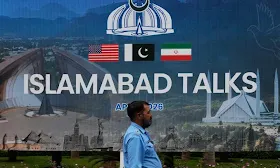
Media Lens: US-Iran Talks in Islamabad End Without Agreement After 21 Hours of Negotiation
U.S.-Iran peace talks fail to reach agreement.
No deal was reached in the U.S.-Iran peace talks that took place in Islamabad. The discussions ended after 21 hours of negotiations, according to coverage in the latest US news and US and global politics.
What happened
Recent U.S.-Iran peace talks in Islamabad have concluded without achieving an agreement after extensive negotiations. The discussions lasted for 21 hours before both sides parted ways without a resolution.
U.S. negotiators described these as the “best and final offer” made to Iran, yet talks ultimately failed to address key issues. The lack of a deal leaves ongoing tensions between the two nations unresolved for the time being.
Key facts
- The U.S.-Iran peace talks in Islamabad have not resulted in a deal.
- These negotiations lasted for approximately 21 hours.
- The U.S. has made what it describes as its “best, final offer” during the talks.
- Reports indicate that the talks ended without a resolution.
Where coverage differs
- NPR emphasizes the lack of a deal in U.S.-Iran peace talks, while Al Jazeera highlights the U.S. position in negotiations and its implications.
- Fox News foregrounds the failed negotiations and the length of talks, whereas The Washington Post prioritizes the direct outcomes of the discussions over the negotiation process.
- Outlet C focuses on the implications of the talks for future relations, rather than solely on the negotiation outcomes.
One story, four angles
NPR – No Deal: U.S.-Iran peace talks in Islamabad fall through
Publication: NPR | Primary framing pattern: consequence | Tone: neutral | Intensity: 5/10 | Sentiment: -2 | Legal precision: moderate
Expand
Espresso Shot: NPR reports that U.S.-Iran talks in Islamabad have ended without reaching a deal, emphasizing the diplomatic failure’s implications for future relations. Key players express disappointment at the unresolved issues affecting mutual interests.
Publication emphasis: The focus is on the failure of negotiations and its potential impacts on U.S.-Iran relations.
Framing analysis: The article foregrounds the consequences of the failed talks, while the underlying issues leading to this outcome are discussed but not deeply examined.
Bias: Selection: Details primarily from U.S. and Iranian officials. Language: Uses cautious language, indicating disappointment. Omission: Limited context on the historical background of talks.
Assessment: NPR provides a restrained yet informative overview, focusing on the immediate implications of the failed negotiations.
Al Jazeera – Iran war live: Vance says no deal reached, US has made ‘best, final offer’
Publication: Al Jazeera | Primary framing pattern: policy | Tone: critical | Intensity: 6/10 | Sentiment: -3 | Legal precision: high
Expand
Espresso Shot: Al Jazeera discusses U.S. claims of making its final offer in the Iran negotiations, highlighting the stark implications of this approach. The article criticizes both sides for inflexibility, indicating potential escalation in tensions.
Publication emphasis: The focus is on the U.S. position and the implications of perceived inflexibility in negotiations.
Framing analysis: The framing foregrounds U.S. policy decisions and their consequences, while backgrounding Iranian stances and historical context.
Bias: Selection: Emphasizes statements from U.S. officials. Language: Uses technical language regarding negotiation strategies. Omission: Background on Iran’s negotiation priorities is minimal.
Assessment: Al Jazeera presents a critical view of the U.S. strategy, effectively framing the negotiations in a broader geopolitical context.
The Washington Post – Direct U.S.-Iran talks fail to reach resolution after lengthy negotiation
Publication: The Washington Post | Primary framing pattern: legal | Tone: formal | Intensity: 7/10 | Sentiment: -4 | Legal precision: high
Expand
Espresso Shot: The Washington Post outlines failures in the U.S.-Iran talks, noting specific legal frameworks and stipulations that were not satisfactorily met. The report delves into the legal implications of failed negotiations for both countries.
Publication emphasis: The focus is on the failure of legal frameworks that guided negotiations.
Framing analysis: The legal framing highlights procedural failures, while the context of ongoing diplomatic efforts is discussed but less prominently.
Bias: Selection: Focuses primarily on official legal language and frameworks. Language: Uses formal legal terminology throughout. Omission: Less emphasis on personal viewpoints of negotiators or broader public reactions.
Assessment: The Washington Post provides a comprehensive legal overview, clearly outlining the implications of the failed talks on future relations.
Fox News – Vance says US-Iran talks end without deal after 21 hours of negotiations
Publication: Fox News | Primary framing pattern: political | Tone: confrontational | Intensity: 8/10 | Sentiment: -5 | Legal precision: low
Expand
Espresso Shot: Fox News reports on the conclusion of the U.S.-Iran talks, highlighting the confrontational rhetoric between the parties, evoking a narrative of blame and missed opportunities. The report emphasizes political fallout and public reaction.
Publication emphasis: The focus is on political ramifications and contentious assertions from both sides.
Framing analysis: The article primarily foregrounds political rhetoric and consequences, while the details about the negotiations are less thoroughly explored.
Bias: Selection: Prioritizes quotes from officials displaying confrontation. Language: Uses emotionally charged terminology. Omission: Lacks analytical depth on negotiation processes.
Assessment: Fox News presents a highly charged portrayal of the failed talks, emphasizing blame and political ramifications rather than substantive negotiation details.
Food for thought
NPR maintains the strongest legal framing by emphasizing the absence of a deal, portraying the negotiations as part of a structured political process, while The Washington Post’s coverage presents a more escalatory framing, hinting at increased tensions by highlighting failures in lengthy talks. Al Jazeera reflects a mix of both tones yet leans toward an objective reporting style. Fox News employs an alarmist angle, stressing the stakes of conflict, which amplifies urgency without clear legal context. In contrast, the presentation from the Independent underscores ramifications of the failed discussions that could lead to dire consequences, echoing the escalatory sentiments.