



Tusk warns of potential ‘Polexit’ as far-right sentiments rise in Poland
Prime Minister Donald Tusk cautioned that Poland faces a real threat of leaving the EU, amidst growing divisions over EU integration and rising Euroscepticism.
Labour leader Donald Tusk stated that a potential Polish EU exit would lead to a catastrophic loss for the nation, highlighting internal political divisions.
Public opinion in Poland shows 62% believe a hypothetical Polexit would be more harmful than beneficial, despite ongoing tensions over EU integration and sovereignty issues.
Briefing summary
Prime Minister Donald Tusk has warned of a genuine threat of a Polish exit from the EU, citing the rise of far-right parties as a significant concern for the country’s future. He stated that leaving the bloc would be a “catastrophe” for Poland.
Tusk is actively working to counteract the influence of his primary opponent, Nawrocki, who advocates for reducing Poland’s EU integration. Growing public discourse on social media reflects a divide regarding Polish sentiments toward EU membership.
Recent surveys indicate a majority of Poles prefer remaining within the EU, with 62% believing that a potential exit would result in more losses than gains. However, uncertainties over future integration remain prevalent, highlighting the ongoing political conflict.
Fact check: Is ‘Polexit’ really on the cards for Poland?
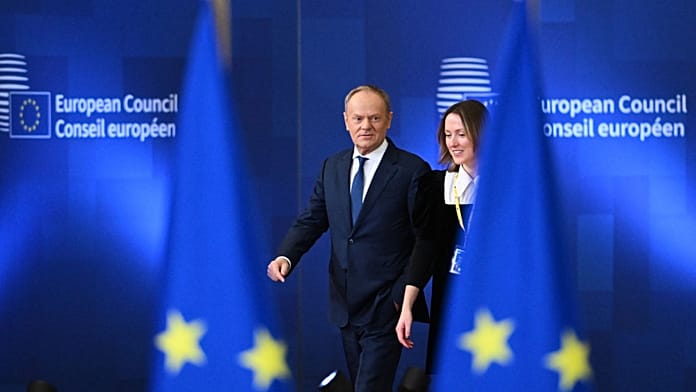
Published on •Updated
Prime Minister Donald Tusk recently warned that there’s a real threat of Poland leaving the EU, amid the rise of far-right and populist parties in the country.
Leaving the bloc “would be a catastrophe” for Poland, he said, adding “I will do everything to stop them.”
Tusk has taken steps to negate Nawrocki’s decision. The former historian has positioned himself as Tusk’s main opponent as the prime minister works to strengthen ties between Warsaw and Brussels following years of strained relations under the previous PiS government.
Tusk’s warnings have led many on social media to question whether Warsaw is really on the verge of launching EU exit proceedings, while conflicting narratives over whether Poles actually want to leave the EU are also emerging.
They amassed thousands of views and appear to target the younger generation to drum up Euroscepticism.
Is ‘Polexit’ imminent?
In fact, Tusk himself was the one to receive the UK’s letter invoking Article 50 when he was serving as European Council president back in 2017.
It’s true, though, that Poland’s right-wing opposition is attempting to block further EU integration and challenge EU law.
Nawrocki and the PiS advocate for a “Europe of Nations”, where the EU remains a trade bloc that doesn’t infringe Poland’s sovereignty, while the smaller, far-right Confederation is purely Eurosceptic and is far more vocal about wanting to leave.
As such, some analysts refer to a potential “legal Polexit”, where Poland remains in the EU but stops recognising the authority of EU law.
A significant example of this was the “Supremacy” ruling of 2021, when the Polish Constitutional Court ruled that certain EU laws were unconstitutional and that Poland’s relevant legislation reigned supreme. Other similar decisions that challenged the EU’s authority were handed down in the following years.
Do Poles want to leave?
While there are some reports that public opinion might also be wavering, surveys tend to show that Poles are still in favour of remaining in the EU.
Still, Poles are divided on how much they want their country to integrate further with the EU, with 26% wanting deeper ties and 23% wanting more autonomy. Some 32% would prefer things to stay as they are.
The same study also says that 62% of Polish citizens think a hypothetical Polexit would bring more losses than gains, with only 9% saying it would generally benefit the country.
While Tusk’s warnings reflect an escalating political conflict, there appears to be no political mandate or parliamentary majority required to leave.