



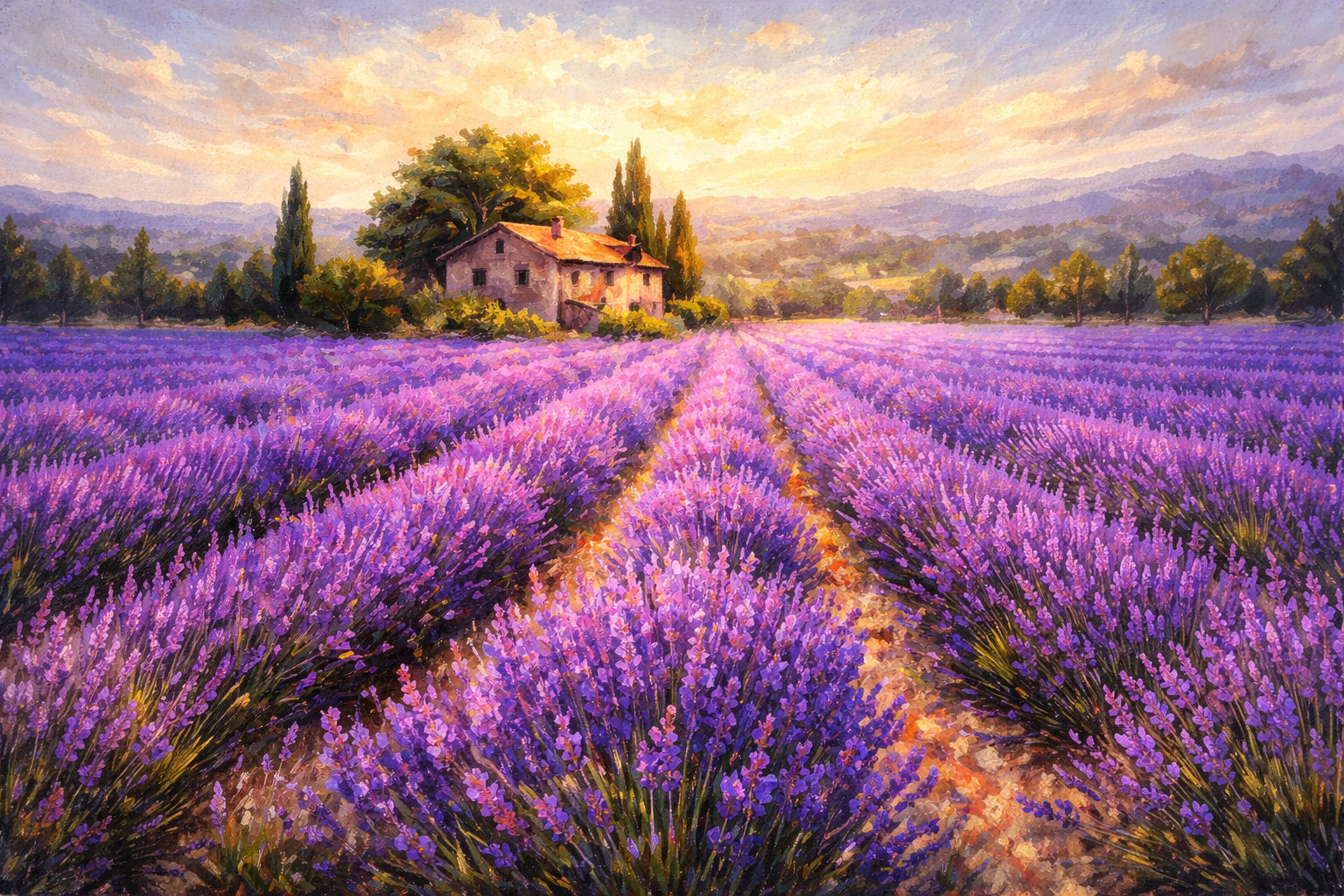
Flower of the Week: Lavender
Lavender is one of those plants that seems to hold the summer vibe in its scent alone. Native to the sun-baked hillsides of the Mediterranean, its purple flower spikes and silvery foliage have become a familiar sight in gardens across Europe.
Gardeners prize lavender not just for its fragrance but for its resilience. It thrives in poor soils, tolerates dry weather and attracts pollinators — qualities that make it especially valuable in modern gardens adapting to warmer summers.
Key plant information
Plant family
Lamiaceae (mint family)
Also known as
English lavender · garden lavender · true lavender
Distinct colours
Purple · violet · lilac · white
Pollen count
Medium — attracts bees and pollinators
Country of origin
Mediterranean region (southern Europe)
Habitat
Dry rocky slopes and well-drained soils
Season type
Summer flowering perennial
Indoor growth
Possible indoors with strong sunlight and drainage
Five things to know
Pollinator favourite. Lavender’s nectar-rich flowers attract bees, butterflies and other beneficial insects, making it an excellent choice for wildlife-friendly gardens.
Drought tolerant. Native to Mediterranean climates, lavender thrives in dry conditions and well-drained soils where many garden plants struggle.
Aromatic oils. Lavender oil has been used for centuries in perfumes, soaps and herbal remedies thanks to its distinctive scent.
Long flowering. Most varieties bloom from early summer into late August, especially when lightly pruned after the first flowering.
Historic plant. Lavender has been cultivated across Europe for hundreds of years and remains a classic feature of cottage gardens.
Regional and horticultural variations
Lavandula angustifolia — English lavender. A compact plant known for its strong fragrance and deep purple blooms.
Lavandula stoechas — Spanish lavender. Recognisable by distinctive “rabbit ear” petals that sit above the flower spike.
Lavandula × intermedia — hybrid lavender. A taller hybrid often grown commercially for essential oil production.
Where lavender grows best
Lavender grows best in sunny, well-drained locations. It is widely cultivated across southern Europe, the Mediterranean basin, North America and Australia where warm, dry climates allow the plant to flourish.
Flowering season
Across most of Europe lavender flowers from June through August, with a second flush sometimes appearing later in the summer after pruning.
Garden tip
Lavender prefers poor soil rather than rich compost. Too much moisture around the roots can weaken the plant, so full sun and good drainage are essential.
Did you know?
The name lavender comes from the Latin lavare, meaning “to wash”. Romans used the plant to scent bathwater and laundry, giving rise to its long association with cleanliness and fragrance.