



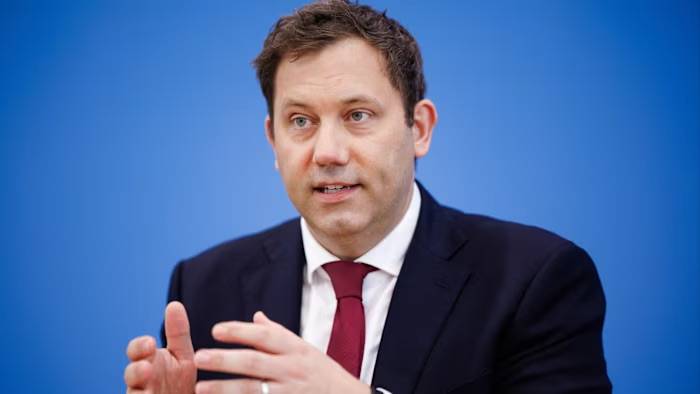
TL:DR – German Finance Minister Lars Klingbeil urges swift advancement of digital euro
• German Vice-Chancellor Lars Klingbeil stated on 16 February 2026 that failing to advance the digital euro is harming Europe.
• The digital euro is currently blocked in the European Parliament, where MEPs are struggling to reach an agreement.
• Spanish MEP Fernando Navarrete is proposing a new design for the digital euro, reducing its scope as outlined by the European Commission.
• The European Parliament is expected to vote on the digital euro in May 2026, which may initiate negotiations between EU institutions.
Delaying digital euro harms Europe, German vice-chancellor says
On Monday, German Vice-Chancellor and Finance Minister Lars Klingbeil stated that failing to advance the digital euro is detrimental to Europe. His remarks were made ahead of a meeting of euro area ministers in Brussels, highlighting the critical need for progress on the legislative proposal currently stalled in the European Parliament.
The digital euro is significant as it aims to provide an electronic form of cash issued by the European Central Bank (ECB), designed to complement existing payment methods. According to Klingbeil, “Anyone who… has not understood that it is now essential to advance the digital euro as quickly as possible is not serving Europe, but harming it.”
Lars Klingbeil’s Urgency on Digital Euro
The digital euro faces challenges in the European Parliament, where members of the European Parliament (MEPs) are struggling to reach an agreement. Spanish centre-right MEP Fernando Navarrete of the European People’s Party (EPP) is currently proposing a revised design for the digital euro, which may limit its initial scope as outlined by the European Commission. The German delegation within the EPP is in favour, indicating internal party divisions.
Klingbeil emphasised the importance of the digital euro for Europe’s financial sovereignty while assuring that cash will continue to exist. He explained that, unlike typical card payments, the digital euro would offer citizens direct access to “public” money and could include a digital wallet for both online and offline use.
The Digital Euro’s Role as an Alternative Payment Method
The proposal for the digital euro has gained traction amid economic tensions between the EU and the US, presenting an alternative to US-based payment systems like Visa and Mastercard. Peter Norwood, a senior research and advocacy figure from the NGO Finance Watch, indicated that these US firms dominate 61% of card payments in Europe.
Norwood added that the digital euro aims to provide Europeans with a publicly backed payment option that would reduce costs and protect privacy. However, Navarrete’s recent proposal suggests that the digital euro may not serve as a direct alternative to existing systems.
The European Parliament is anticipated to vote on the digital euro in May, and if it passes, negotiations will commence between the European Commission, European Parliament, and the Council of the EU.