



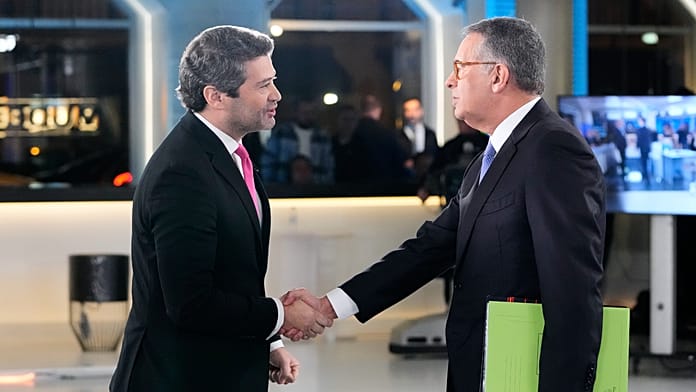
TL:DR – Portugal Votes in Second Round of Presidential Election on Sunday
• Portugal began voting in the second round of its presidential election on 8 February 2026, with António José Seguro (PS) and André Ventura (Chega).
• Approximately 11 million people are eligible to vote in this election.
• António José Seguro secured 31.1% of the first-round vote, while André Ventura received 23.52%.
• The last time a second round was needed was in 1986.
• Portugal’s president has a largely symbolic role, with significant powers including the ability to dissolve parliament.
Portugal chooses between moderate and a populist candidates in presidential election runoff
Portugal began voting in the second round of its presidential election on Sunday, 8 February 2026, as citizens choose between centre-left Socialist Party candidate António José Seguro and far-right Chega party leader André Ventura. This election is significant as it represents a notable shift in the political landscape, with 11 million eligible voters, both domestically and abroad, participating.
The immediate significance lies in the fact that neither candidate secured the 50% of votes required for a first-round victory, with Seguro receiving 31.1% and Ventura 23.52%. As a result, voters are now determining who will lead Portugal in a nation where political dynamics are increasingly evolving.
Historical Context of the Election
This is the first second round for a presidential election in Portugal in 40 years. The last instance was in 1986, when Socialist Party leader Mário Soares emerged victorious against conservative CDS leader Diogo Freitas do Amaral, marking a significant political turnaround.
Current Political Landscape in Portugal
Political change is underway in Portugal, as André Ventura’s strong performance in the first round reflects Europe’s broader trend towards far-right populism. António José Seguro has positioned himself as a moderate candidate, promising to foster stability and work alongside the current centre-right minority government.
Role of the Portuguese President
The president of Portugal holds a largely symbolic role without executive power, primarily acting as a mediator and defusing political tensions. However, the president is equipped with influential tools, including the ability to veto legislation and dissolve parliament, a power that remains critical in the context of ongoing political instability. The next elected president will succeed centre-right president Marcelo Rebelo de Sousa, who has completed two five-year terms.
“