



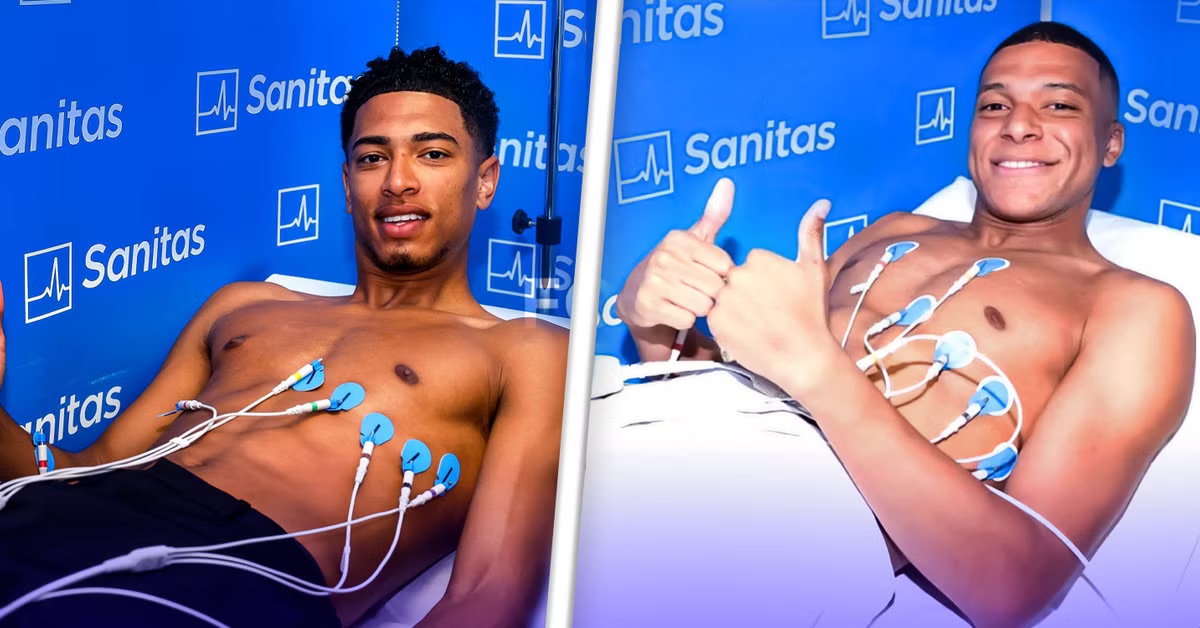
TL:DR – Transfer news: What happens in a Football medical?
A player’s medical exam is not a definitive pass or fail; it informs the buying club of potential risks. Dr. Charlotte Cowie emphasises the subjective nature of these evaluations, noting decisions depend on the club’s needs and the player’s condition.
Historical examples include Ruud van Nistelrooy’s delayed transfer and Kurt Zouma’s failed medical, showcasing the complexities involved in player signings.
Medical Examinations: Impact on Player Transfers in Football
A player’s medical is often described as the final hurdle in completing a transfer, but in practice it is far more complex than a simple pass-or-fail test.
Rather than delivering a definitive verdict, medical examinations provide clubs with detailed information about a player’s physical condition, allowing them to assess risk before deciding whether to proceed with a deal. The outcome ultimately depends on how that information is interpreted by the buying club.
Check out all the latest transfer gossip
Why football medicals are not a simple pass-or-fail test
Football medicals involve a series of physical examinations, scans and performance assessments designed to identify existing injuries or potential long-term issues. However, doctors do not decide whether a transfer goes ahead.
Instead, their role is to present findings to club decision-makers, who then weigh those risks against the player’s expected contribution, cost and availability.

Dr Charlotte Cowie, who has previously worked within the medical departments at Tottenham Hotspur and Fulham, has explained that identical medical results can lead to very different outcomes.
A concern that halts one transfer may be accepted by another club if the player’s role, workload or contract length makes the risk manageable. In that sense, the medical functions more as an advisory process than a final judgement.
How clubs weigh risk in transfer decisions
The way clubs interpret medical findings often mirrors other high-value decisions, such as property purchases. Just as a survey informs a buyer rather than dictating the outcome, a medical report equips clubs with information that helps them decide how much risk they are willing to take.
If a club is determined to complete a signing, it may proceed despite issues highlighted during the examination. That calculation depends on several factors, including the player’s age, injury history and the demands of the position they are expected to play.
A recurring muscle problem may be acceptable for a squad player, but far less so for someone expected to play every minute of a congested season. Financial considerations also play a role, with transfer fees and wages influencing how much uncertainty a club is prepared to absorb.
Football transfers that collapsed after a failed medical
Several high-profile transfers have highlighted where medical findings have significantly altered transfer plans. Ruud van Nistelrooy’s proposed move to Manchester United in 2000 was delayed after concerns emerged during his medical, a decision that proved prudent when the striker ruptured his anterior cruciate ligament shortly afterwards. In other cases, deals have collapsed over findings that were less clear-cut.
George Boyd’s move from Peterborough United to Nottingham Forest fell through in 2013 after an eye test produced inconclusive results, despite the midfielder going on to continue his career elsewhere.
More recently, Kurt Zouma’s anticipated transfer from West Ham United to Shabab Al-Ahli did not proceed after the defender failed his medical examination in the United Arab Emirates. Each case highlighted how clubs differ in their tolerance for medical risk.
While supporters often view medicals as a routine formality, they remain one of the most complex stages of the transfer process. Far from offering a definitive answer, they force clubs to make calculated decisions that can shape the success or failure of a signing long after the paperwork is completed.