- Complete Schedule of DWP Christmas 2025 Payment Dates
- Teen Dies Following Car Flip in Baildon Accident
- Poppers and condoms discovered in bathroom post-Andrew’s Sandringham bash
- Massive blaze at Methil Harbour: Several lorries in flames
- Hero neighbor rescues family just before home engulfed in flames
- Family grieves motorcyclist lost in collision with van | UK News
- UK to ban puppy farms and trail hunting in major animal welfare reform
- Prison Brawl Involves Stephen Lawrence’s Killer and Manchester Bomber
Weight-loss drugs key to longer life | Paper Talk UK
Bias Exposure
Weight-loss drugs key to longer lift | Paper Talk UK
Weight loss drugs key to longer life? Yes! – according to a new study, weight-loss drugs can delay diseases associated with ageing such as dementia and halve the number of deaths from heart attacks. The breakthrough research suggests people in the UK could be given access to such drugs in the near future as part of the government’s aim to drive preventative medicine.
At present, weight-loss drugs are only available for those who are obese. If extended to combat a wider range of issues, it could usher in a ‘golden age’ of medicine, according to the research. It could also have a major positive impact on the NHS.
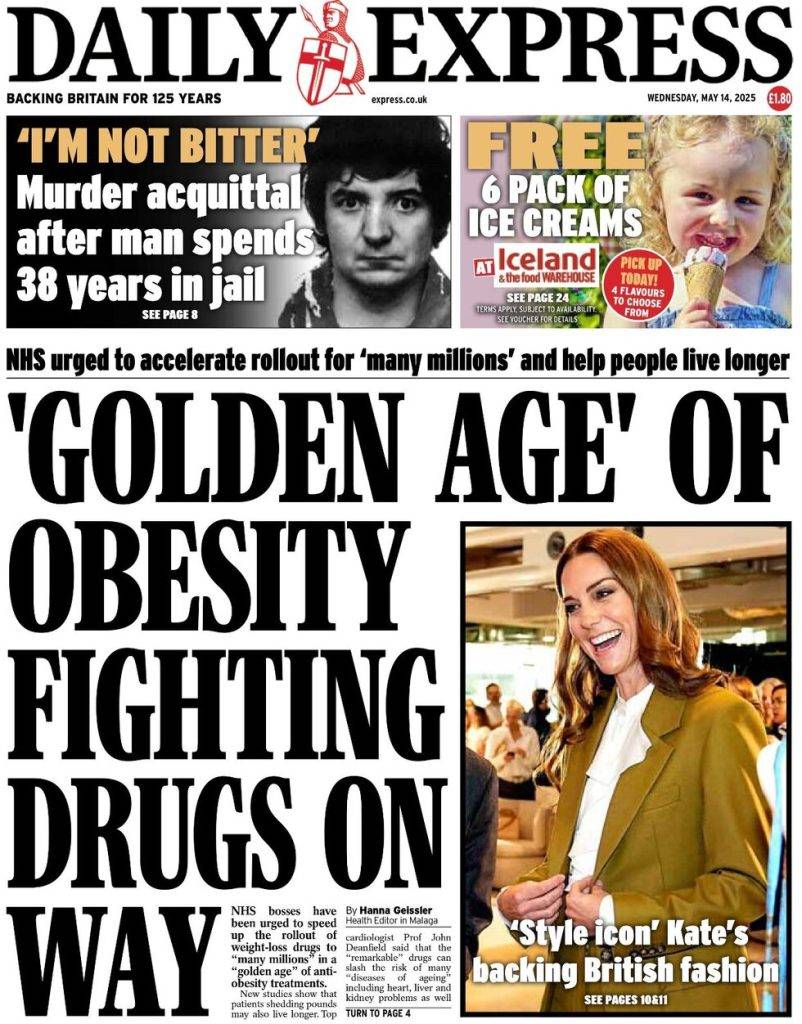
Daily Express
The Daily Express says the NHS is being urged to speed up the rollout of weight-loss drugs – which could reach ‘many millions’ and help people live longer. A top professor said he did not want to “medicalise the whole population”, but “it is a golden opportunity to change society and transform the way in which we think about longevity”.
EXPLAINER
The headline “Golden age of obesity-fighting drugs on the way” uses optimistic and hyperbolic language to frame a medical development as a transformative breakthrough.
The phrase “golden age” evokes a sense of historic progress and near-miraculous potential, while “on the way” suggests imminent change and hope. This kind of framing is typical of science and health reporting that seeks to inspire excitement, sometimes at the risk of oversimplifying complex medical realities. It positions pharmaceutical advances as sweeping solutions, fuelling public anticipation and market interest through bold, forward-looking language.
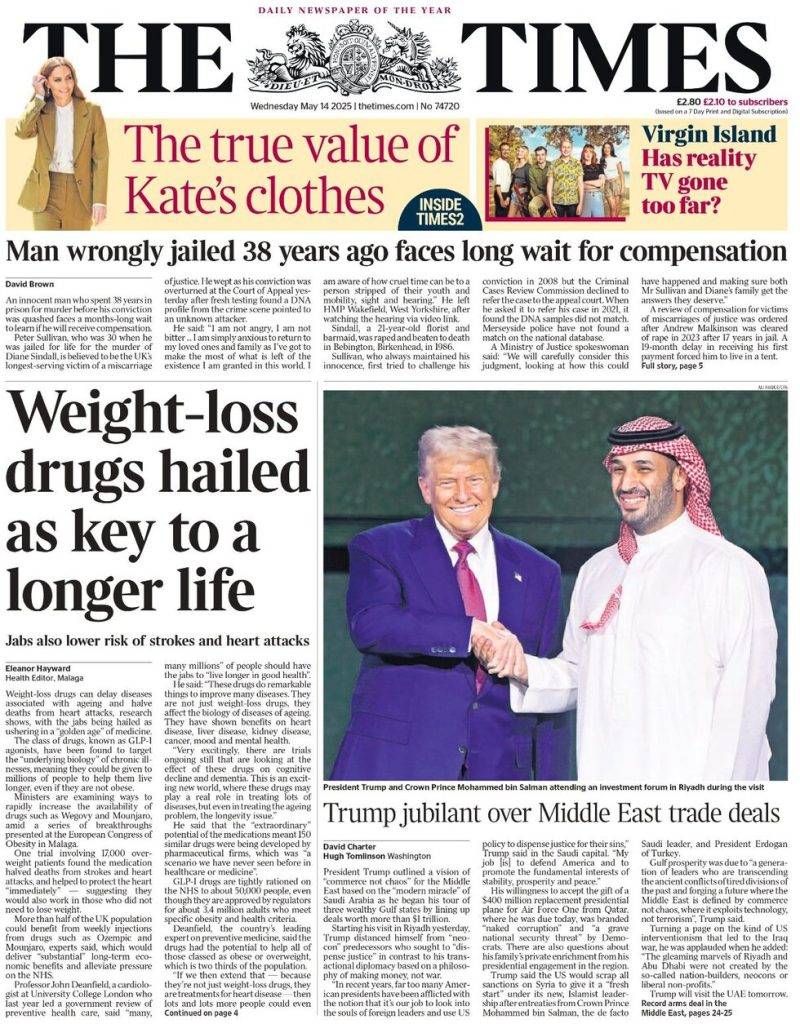
The Times
What the newspaper said
The Times says drugs such as Ozempic and Wegovy are “key to a longer life.” The paper says the weight-loss drugs can delay diseases associated with ageing and halve deaths from heart attacks, as the jabs are hailed as ushering in a “golden age” of medicine.
EXPLAINER
The headline “Weight-loss drugs hailed as key to a longer life” uses celebratory and authoritative language to elevate medical treatments to the status of life-extending breakthroughs.
The word “hailed” implies widespread praise and approval, lending the claim a sense of consensus and credibility, while “key to a longer life” positions these drugs as essential and transformative.
This framing simplifies nuanced health science into a compelling narrative of cure and longevity, appealing to public hopes and anxieties about ageing and wellness. It’s a classic example of health journalism leaning into optimism to attract attention and reinforce the promise of medical progress.
The Daily Telegraph
What the newspaper said
The Daily Telegraph reports most Britons could use the jabs to live longer according to a medic. The paper notes that experts hailed a “golden age” in obesity treatment thanks to drugs which have been found to halve deaths from killer diseases. Around 150 new treatments – including jabs and pills – could be available over the next 10 years to help people not deemed “overweight or obese.”
EXPLAINER
The headline “Britons not deemed obese could soon use weight-loss jabs to live longer” uses speculative and emotive framing to suggest a shift in medical access and public health norms.
The phrase “not deemed obese” introduces a sense of threshold and exclusion, implying that treatments once reserved for the clinically obese may soon be more widely available.
“Weight-loss jabs” uses informal, accessible language to make the treatment sound simple and appealing, while “to live longer” taps into universal fears and aspirations around health and longevity. This construction blends medical promise with social commentary, fuelling debate and interest by hinting at changing boundaries of who gets access to powerful health interventions.
What the newspaper said
The Daily Mail says a new pill “that mimics the effects of a gastric bypass” has been touted as the latest “weight loss miracle” and research suggests it may end up being more effective than “fat jabs” in the long term. The capsules produce a temporary coating in the gut that prevents food from being absorbed, forcing it into the lower intestine and triggering hormones that make you feel full, the paper reports.
EXPLAINER
The headline “‘Golden age’ weight-loss pill that mimics gastric bypass op is hailed a ‘miracle’ – and said to be better than fat jabs” is a prime example of sensationalist health reporting, combining hyperbole, contrast, and novelty to maximise impact.
The phrase “‘golden age'” sets an overly optimistic tone, while calling the pill a “‘miracle'” adds emotional weight and exaggeration. Comparing it to “fat jabs”—a colloquial, somewhat flippant term—injects competition into the narrative, framing the new pill as a superior solution.
This kind of language simplifies complex medical developments into dramatic, consumer-friendly soundbites, prioritising excitement and market appeal over clinical nuance.
Subscribe to Updates
Get the latest creative news from FooBar about art, design and business.