
Latest News
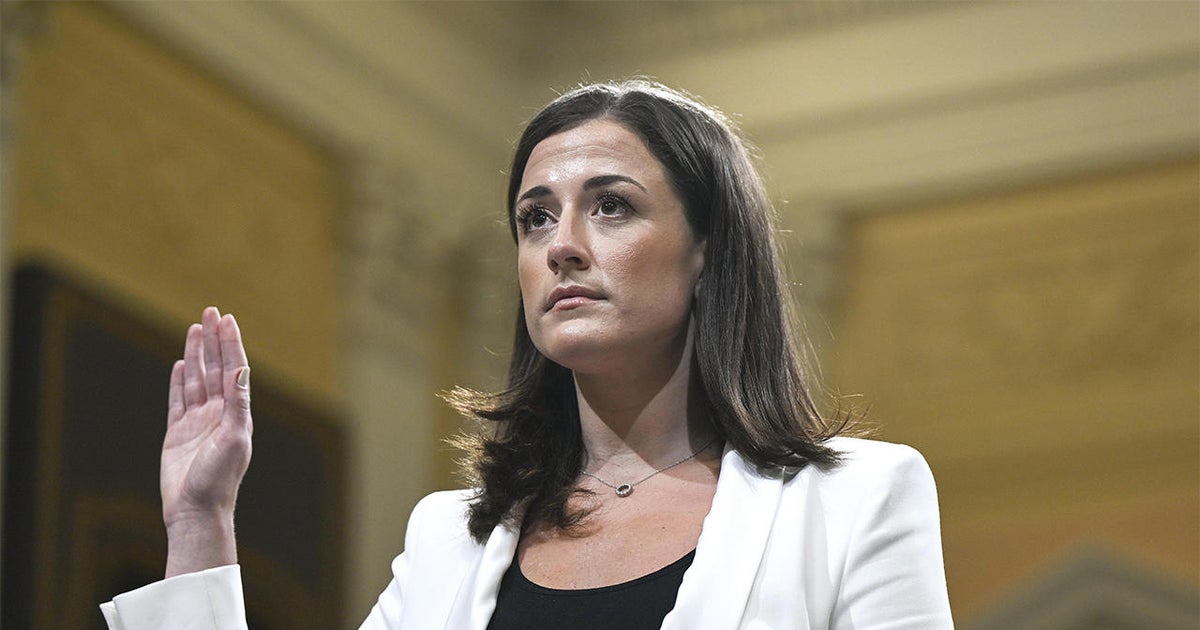
- Grand jury decides against indicting Cassidy Hutchinson over Jan. 6 testimony
- Ukrainians return to homes following ceasefire agreement amid ongoing conflict
- Record Voter Turnout in Israel’s Pivotal Election as Netanyahu Faces Eisenkot
- Israel election results expected as Netanyahu faces tight race amidst high turnout
- Chow faces budget challenges and provincial negotiations after election win
- Justice Department requests Washington state to set aside ballots from 400 alleged noncitizens
- Harry Kane could be considered for a knighthood after Ballon d’Or win
- Nurse treating Ebola patients killed by machete-wielding gang in DRC



A Black Lives Matters protest in London regarding Chris Kaba.
Looks like the white, middle class organisers forget to invite any black people.

In the wake of death of UK political prisoner, Peter Lynch, who was fast tracked into prison for essentially shouting in the street.
The grandfather was ultimately sentenced to death.
Pakistani family who attacked police at Manchester Airport, STILL haven't even been charged.

Tiny ‘Black Lives Matter’ crowd gathers outside the Old Bailey courtrooms to protest the not guilty verdict of the police officer who shot violent criminal Chris Kaba.
Kaba rammed his car repeatedly into armed police officers’ cars.
BLM is finished in the UK.
Get you up to speed: Ukrainians return to hellscape they called home after ceasefire agreed | News World
A temporary ceasefire between Ukraine and Russia took effect at 4am Moscow time, facilitated by Melania Trump, allowing humanitarian aid to reach affected areas. Ukrainian Parliamentary Human Rights Commissioner Dmytro Lubinets confirmed that “both sides are observing the ceasefire,” with no incidents reported since 3am.
The temporary ceasefire took effect at 4am Moscow time and will last until 10.59pm local time on Sunday. Ukrainian Parliamentary Human Rights Commissioner Dmytro Lubinets stated that both sides are observing the ceasefire, with no reported violations since its commencement.
The temporary ceasefire in the Kherson Region, brokered by Melania Trump, allows for significant humanitarian assistance and has led to a surge in public activity, with longer queues at bus stops and residents running errands for the first time in months. Ukrainian officials have assured that both sides are currently observing the ceasefire, with Dmytro Lubinets confirming no violations have been reported since it took effect.
What remains unclear — It is not known how many humanitarian convoys will be allowed to pass through during the temporary ceasefire.
Ukrainians return to homes following ceasefire agreement amid ongoing conflict
Ukrainian’s have been returning to their homes to see what is left after years of rocket strikes.
With just the River Dnipro separating Ukrainian and Russian troops,Oleshky has been a key strategic town where Putin’s advance has ground to a halt.
Now a temporary ceasefire between Kyiv and Moscow has been brokered by First Lady Melania Trump, allowing respite and much-needed supplies to come through.
Residents returned on the roads as they were being cleared of mines carrying shopping bags of vital supplies back to hollowed-out shells of apartment blocks.
As night descended, Ukrainian Parliamentary Human Rights Commissioner Dmytro Lubinets said: ‘Both sides are observing the ceasefire. I made a verification call to the person on our side who monitors Russian compliance with the ceasefire.
‘I was told that there had been no incidents or violations since 3am. Russian forces have not advanced, attempted to seize any islands, or sought to improve their positions. None of that has happened,’ Lubinets said.
Sign up for all of the latest stories
Somehow there are as many as 2,000 people still living in the frontline city refusing to leave their homes.
‘Those who want to leave for Ukraine will receive dedicated assistance: they will be accompanied, met upon arrival, provided with accommodation, and helped in Ukraine. All government agencies are working on this under our coordination,’ Lubinets said.

A woman walks on a street covered with an anti-drone net, amid Russia’s attack
(Picture: REUTERS)
Melania Trump said on X: ‘The ceasefire between Ukraine and Russia took effect at 4am Moscow time.
‘Timing was accelerated two days ahead of schedule to protect the safety of civilians and to facilitate the delivery of critical humanitarian aid.
‘The ceasefire’s geographic area has expanded beyond Oleshky, within the Kherson Region, to provide safe passage for the humanitarian convoys.’

Oleshky is about 550 kilometers (340 miles) southeast of Kyiv. It sits on the Russian-occupied side of the Dnipro River, across from the Ukrainian-held city of Kherson, the regional capital.
Ksenia Arkhipova, who fled the city in 2022 and now, as a volunteer, helps others leave, said some residents have told her they fear Russian officials may ‘filter out’ evacuees with pro-Ukrainian views.
‘People say they are genuinely afraid that the Russians will check their phones and look for evidence of Ukrainian relatives or ties to the Armed Forces of Ukraine — something they have done repeatedly in other occupied territories,’ Arkhipova said.
Under international law, the occupying power — Russia — must ensure civilians under its occupation live safely. Ukraine has repeatedly tried to negotiate with Moscow to establish a humanitarian corridor for evacuations and aid delivery.

2,000 people refused to leave the war-torn city (Picture: AP)
In Kherson, the streets were busier than usual and long lines formed at bus stops as residents used the truce to run errands.
‘It’s unusual when it’s this quiet,’ said Oleksandra Kostenko, who runs a small coffee kiosk. ‘We’re used to it being loud — the buzzing, the booming.’
But she fears Russia will use the lull to stockpile drones.
‘It will end, and they will terrorise us,’ Kostenko said.
Kherson bears the deep scars of war — windows boarded up, anti-drone nets stretched over streets and shattered glass littering sidewalks.
The local ceasefire is due to continue until 10.59pm local time on Sunday.
Comment now
Comments
Add WTX as a Preferred Source on Google
